
.jpeg)
Acalabrutinib instructions
1. Indications
Acalabrutinibis a kinase inhibitor used to treat the following adult patients:
•Mantle cell lymphoma(MCL) who has received at least one prior treatment.
This indication received accelerated approval based on overall response rate. Continued approval for this indication may be contingent upon verification and characterization of clinical benefit in confirmatory trials.
•Chronic lymphocytic leukemia (CLL)or small lymphocytic lymphoma(SLL).
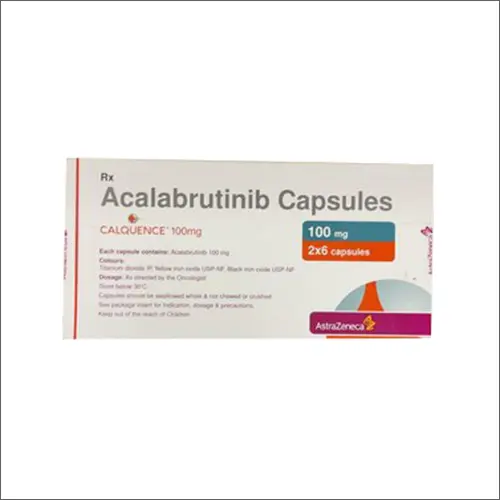
2. Dosage and usage
•The recommended dose is 100mg taken by mouth approximately every 12 hours, swallow whole with water.
•Advise patients not to break, open, or chew capsules.
•Manage toxicity by interrupting treatment, reducing dose, or discontinuing drug.
•Patients with severe liver damage should avoid taking this product.
Three. Dosage form
Capsule: 100 mg.
Four. Contraindications
None
Five. Warnings and Precautions
1.Serious and opportunistic infections. Consider prophylaxis for patients at increased risk for opportunistic infections and monitor patients for signs and symptoms of infection and treat promptly.
2.Bleeding. Taking this product with antithrombotic drugs may further increase the risk of bleeding. In clinical trials,2.7%of patients taking caraquiline but not antithrombotic agents and 3.6%of patients taking caraqueline but taking antithrombotic agents had major bleeding. Consider the risks and benefits of coadministering antithrombotic drugs with Carquis and monitor patients for signs of bleeding. Depending on the type of surgery and risk of bleeding, consider the pros and cons of stopping medication before and 3-7 days after surgery.
3.Cytopenia. Grade 3 or 4cytopenia, including neutropenia(23%), anemia(8%) span>, thrombocytopenia(7%), and lymphocytopenia(7%) occur in patients with hematological malignancies receiving carquine. Grade 4 neutropenia occurred in 12% of patients. Monitor complete blood counts regularly during treatment. Interrupt treatment, reduce dose, or discontinue treatment as needed.
4.Second primary malignant tumor. The most common second primary malignancy is skin cancer, which is reported in 6% of patients. Monitor patients with skin cancer and recommend avoiding sun exposure.
5.Atrial fibrillation and flutter. Patients with cardiac risk factors, hypertension, previous arrhythmias, and acute infections may be at increased risk, monitor for arrhythmia symptoms (such as palpitations, dizziness, syncope, dyspnea) and treat appropriately.
6.Using this drug during pregnancy can harm the fetus. If the patient is a woman who can become pregnant, the doctor may test to make sure there is no pregnancy before starting this medication. Use effective contraception to prevent pregnancy during treatment and for at least 1 weeks after the last dose.
6. drug interactions
•CYP3AInhibitors:Avoid coadministration with strongCYP3Ainhibitors, dose adjustment may be recommended.
•CYP3AInducers:Avoid coadministration with strongCYP3A inducers, dose adjustment may be recommended.
•Gastric acid reducer:Avoid coadministration with proton pump inhibitors(PPIs), staggered administration of H2receptor antagonists and antacids.
7. Use among specific groups of people
•Pregnancy:May cause fetal harm and difficult labor.
•Breastfeeding:Breastfeeding is not recommended.
The Laotian and Bangladeshi versions cost about 6,000 to 8,000 per box, and they are both on the market. If you want to get more high-quality information, you can contact Yaode, and Yaode will do its best to learn more about high-quality overseas drugs for you.
xa0
[ 免责声明 ] 本页面内容来自公开渠道(如FDA官网、Drugs官网、原研药厂官网等),仅供持有医疗专业资质的人员用于医学药学研究参考,不构成任何治疗建议或药品推荐。所涉药品可能未在中国大陆获批上市,不适用于中国境内销售和使用。如需治疗,请咨询正规医疗机构。本站不提供药品销售或代购服务。


