
.jpeg)
What are the precautions for taking everolimus?
Everolimusis an oral protein kinase inhibitor of the mTOR (mammalian target of rapamycin)serine/threonine kinase signaling pathway. The mTOR pathway regulates cell growth, proliferation, and survival and is frequently deregulated in cancer. EverolimusIndicated in combination with exemestane for the treatment of hormone receptor-positive, HER2/neunegative advanced breast cancer, for the treatment of postmenopausal women with recurrence or progression of asymptomatic visceral disease after use of nonsteroidal aromatase inhibitors, and for the treatment of unresectable or metastatic, well-differentiated, or moderate neuropathy of pancreatic origin in adults with progressive disease Endocrine tumors, and for the treatment of unresectable or metastatic, well-differentiated (Grade 1 or Grade 2) non-functioning neuroendocrine tumors of gastrointestinal or pulmonary origin in adults with progressive disease, and for the treatment of patients with advanced renal cell carcinoma.
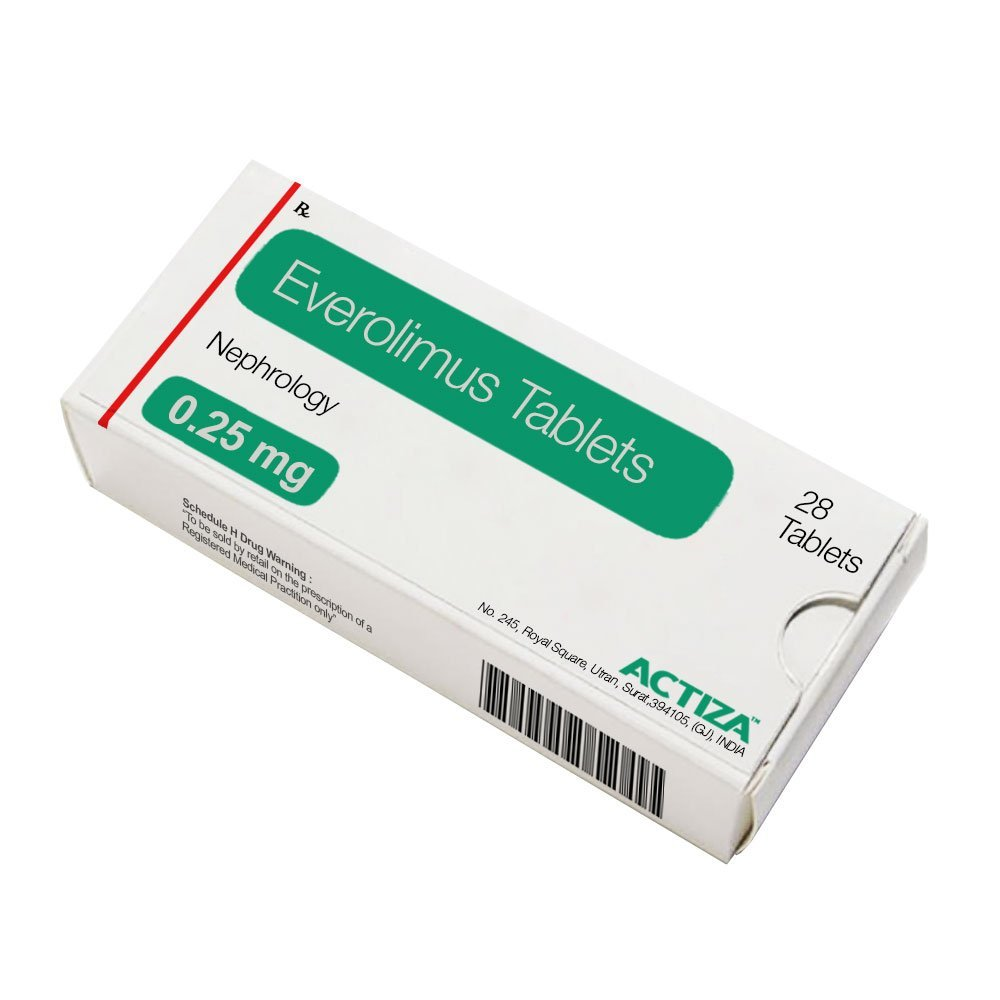
Everolimus(everolimus)What are the precautions?
1.Immunosuppression. Only physicians experienced in the management of immunosuppressive therapy in transplant systems should prescribe everolimus. Patients receiving medications should be managed in a facility with adequate laboratory and supportive medical resources. Physicians responsible for maintenance therapy should have complete information for patient follow-up. In limited data on complete elimination of calcineurin inhibition(CNI), the risk of acute rejection is increased.
2.Lymphoma and other malignant tumors. Patients receiving immunosuppressants (including everolimus)are at increased risk of developing lymphoma and other malignancies (especially skin tumors). This risk appears to be related to the intensity and duration of immunosuppression rather than the use of any specific drug. Exposure to sunlight and UV rays should be limited by wearing protective clothing and using sunscreen with a high protection factor.
3.Serious infection. Bacterial, viral, fungal and protozoal infections occurred in patients receiving immunosuppressants (including everolimus)Including opportunistic infections)Increased risk. These infections can have serious, including fatal, consequences. Due to the danger of excessive immunosuppression, which can lead to increased susceptibility to infection, combined immunosuppressive therapy should be used with caution.
4.Transplant renal thrombosis. There is an increased risk of thrombosis of the renal arteries and veins, leading to graft loss, usually within the first30 days after transplantation.
5.Hepatic artery thrombosis. Mammalian target of rapamycin(mTOR)Inhibitors are associated with increased hepatic artery thrombosis(HAT). Most reported cases occur within the first 30 days after transplantation, and most result in graft loss or death. Therefore, everolimus should not be administered before 30 days after liver transplantation.
6.Nephrotoxicity caused by everolimus and calcineurin inhibitors. In renal transplant recipients, everolimus combined with standard-dose cyclosporine increases the risk of nephrotoxicity, resulting in a decrease in glomerular filtration rate. To reduce renal dysfunction, a reduced dose of cyclosporine may be required when used concomitantly with everolimus. Everolimus and standard-dose tacrolimus have not been studied in liver transplant recipients. Reduced doses of tacrolimus should be used in combination with everolimus to reduce the potential risk of nephrotoxicity. Kidney function should be monitored while taking everolimus. If renal function does not improve after dose adjustment, or if the dysfunction is thought to be drug-related, consider switching to an alternative immunosuppressive therapy. Caution should be used when using other drugs known to impair kidney function.
7.Heart transplantation. The use of everolimus in heart transplantation is not recommended.
8.Angioedema. Everolimus has been associated with the development of angioedema. Taking everolimus with other drugs known to cause angioedema, such as angiotensin-converting enzyme (ACE) inhibitors, may increase the risk of angioedema.
9.Wound healing and fluid accumulation. Everolimus increases the risk of delayed wound healing and increases the occurrence of wound-related complications such as wound dehiscence, wound infection, incisional hernia, lymphocele, and seroma. These wound-related complications may require more surgical procedures. Generalized effusions, including peripheral edema(such as lymphedema)and other types of localized effusions such as pericardial effusion, pleural effusion, and ascites, have also been reported.
There are regular generic drugs on the market in India. IndiaGlenmarkPharmaceutical retail price5mg10tabletsAbout 900yuan, 10mg10 tabletsabout 1500yuan. IndiaciplaPharmaceutical retail price5mg10tablets860yuan, 10mg10tablets1300yuan. If you want to get more high-quality information, you can contact YaDE. YaDE will do its best to learn more about high-quality overseas drugs for you.
xa0
xa0
[ 免责声明 ] 本页面内容来自公开渠道(如FDA官网、Drugs官网、原研药厂官网等),仅供持有医疗专业资质的人员用于医学药学研究参考,不构成任何治疗建议或药品推荐。所涉药品可能未在中国大陆获批上市,不适用于中国境内销售和使用。如需治疗,请咨询正规医疗机构。本站不提供药品销售或代购服务。


