
.jpeg)
Limited treatment options in nccRCC expanded with IO/TKI (cabotinib) combination
The availability of treatment data for patients with clear cell renal cell carcinoma (ccRCC) dominates the treatment landscape for these patients, as the majority of patients with renal cell carcinoma (RCC) have ccRCC. One of the biggest challenges facing the field of advanced clear cell renal cell carcinoma (nccRCC) is that there is no standard of care therapy, and according to National Comprehensive Cancer Network (NCCN) guidelines, the preferred treatment for patients with nccRCC is inclusion in clinical trials. In the NCCN guidelines, once a patient develops disease relapse or stage IV metastatic disease and non-clear cell histology is confirmed, in addition to enrolling the patient in a clinical trial, the preferred systemic therapy is cabozantinib.
Cabotinib is a TKI that targets receptors including MET, RET, AXL, VEGFR2, FLT3 and c-KIT. Since it is approved for patients with metastatic ccRCC, it is also approved for patients with nccRCC. Cabozantinib demonstrated benefit in a multicenter, international, retrospective cohort study of 112 patients with nccRCC treated with cabozantinib at 22 cancer centers.
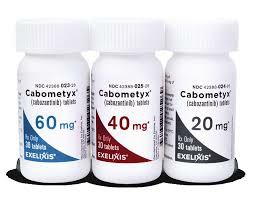
The researchers found that among patients at all these centers,the objective response rate for all subgroups of nccRCC histology was 27% (95% CI, 19%-36%). After a median follow-up of 11 months, the median progression-free survival (PFS) was 7.0 months (range, 5.7-9.0), and the median overall survival (OS) was 12.0 months (range, 9.2-17.0). No new safety signals were observed, concluding in this study that while the field awaits final data from these trials of cabozantinib, real-world evidence supports the use of cabozantinib in patients with advanced clear cell renal cell carcinoma (nccRCC).
While cabozantinib has shown promising efficacy in this area, it opens the door to greater consideration ofTKIs, particularly combinations of TKIs with immunotherapy (IO). Other recommended regimens now include nivolumab plus cabozantinib, pembrolizumab, and lenvatinib plus everolimus, according to NCCN guidelines.
The original drug Cabozantinib is not marketed in the country and therefore cannot be included in medical insurance. The original cabozantinib drug marketed overseas includes Japanese, European and Turkish versions. The price of tablets may be more than 30,000 yuan, and the price of capsule preparations may be more than 40,000 yuan (prices may fluctuate due to exchange rates). There are also generic drugs produced in other countries overseas, and their pharmaceutical ingredients are basically the same as those of the original drugs. For example, the price of pharmaceuticals produced by Bangladeshi pharmaceutical factories may be more than 2,000 yuan (the price may fluctuate due to the exchange rate), which is relatively cheap.
[ 免责声明 ] 本页面内容来自公开渠道(如FDA官网、Drugs官网、原研药厂官网等),仅供持有医疗专业资质的人员用于医学药学研究参考,不构成任何治疗建议或药品推荐。所涉药品可能未在中国大陆获批上市,不适用于中国境内销售和使用。如需治疗,请咨询正规医疗机构。本站不提供药品销售或代购服务。


