
.jpeg)
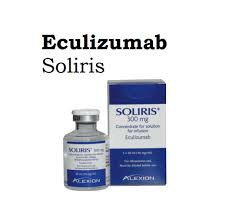
Instructions for Eculizumab
1. Name: Eculizumab
Product name: Soliris,Soliris
All names: Eculizumab,Eculizumab, eculizumab, eculizumab
2. Indications:
1. Paroxysmal nocturnal hemoglobinuria (PNH): Eculizumab is suitable for the treatment of patients with paroxysmal nocturnal hemoglobinuria to reduce hemolysis.
2. Atypical hemolytic uremic syndrome (aHUS): Eculizumab is suitable for the treatment of patients with atypical hemolytic uremic syndrome to inhibit complement-mediated thrombotic microangiopathy.
3. Generalized myasthenia gravis (gMG): Eculizumab is suitable for the treatment of generalized myasthenia gravis in adults with positive anti-acetylcholine receptor (AchR) antibodies.
4. Neuromyelitis optica spectrum disorder (NMOSD): Eculizumab is indicated for the treatment of neuromyelitis optica spectrum disorder in adult patients who are anti-aquaporin-4 (AQ P4) antibody-positive.
Restrictions on Use: Eculizumab is not indicated for the treatment of patients with Shiga toxin E. coli-associated hemolytic uremic syndrome (STEC-HUS).
3. Usage and dosage:
1. Before medication: Vaccinate patients according to current ACIP guidelines to reduce the risk of serious infection. If eculizumab treatment must be started immediately and the vaccine is administered less than two weeks before starting treatment, provide the patient with two weeks of antimicrobial prophylaxis. Healthcare professionals who prescribe eculizumab must participate in the Soliris REMS program.
2. Recommended dosage:
(1) Paroxysmal nocturnal hemoglobinuria (PNH): For patients 18 years of age and older, eculizumab therapy consists of 600 mg weekly for the first 4 weeks, followed by a fifth dose of 900 mg 1 week later, and 900 mg every 2 weeks thereafter. Administer eculizumab at the recommended dosing schedule time points or within two days of these time points.
(2) Atypical hemolytic uremic syndrome (aHUS), generalized myasthenia gravis (gMG), neuromyelitis optica spectrum disorder (NMOSD): For patients 18 years of age and older, eculizumab therapy consists of 900 mg weekly for the first 4 weeks, followed by a fifth dose of 1,200 mg 1 week later, and 12,000 mg every 2 weeks thereafter. Administer eculizumab at the recommended dosing schedule time points or within two days of these time points.
ForFor aHUS patients under 18 years of age, eculizumab is administered according to body weight: patients ≥40 kg, 900 mg weekly for the first 4 weeks, followed by a fifth dose of 12,000 mg 1 week later, and 1,200 mg every 2 weeks thereafter; patients ≥30 kg to <40 kg, 600 mg weekly for the first 2 weeks, followed by a third dose 900 mg 1 week later, and 900 mg every 2 weeks thereafter; patients ≥20 kg to <30 kg , 600 mg per week for the first 2 weeks, then 600 mg for the third dose 1 week later, and 600 mg every 2 weeks thereafter; for patients ≥10kg to <20kg, 600 mg per week for the first 1 week, then 600 mg every 2 weeks thereafter; 2 doses of 300 mg, then 300 mg every 2 weeks; for patients ≥5kg to <10kg, 300mg in the first week, then 300mg in the second dose 1 week later, and 300mg every 3 weeks thereafter.
3. Medication management: Eculizumab is administered only as an intravenous infusion, via gravity administration, syringe pump or infusion pump. The eculizumab mixture is infused intravenously for 35 minutes in adult patients and for 1 to 4 hours in pediatric patients. If adverse reactions occur during use, the infusion may be slowed down or stopped at the physician's discretion. If the infusion rate is slowed, the total infusion time for adults should not exceed two hours. After the infusion is completed, monitor the patient for at least one hour for signs or symptoms of infusion-related reactions.
4. Adverse reactions:
In clinical studies of eculizumab, the most common side effects included headache, and the most serious side effect was meningococcal sepsis (bacteria and their toxins circulating in the blood and damaging organs). After eculizumab was put on the market, fatal or serious infections also occurred: such as Neisseria gonorrhoeae, Neisseria meningitidis, Neisseria sicca/Neisseria subplanus, unspecified Neisseria spp., etc.
5. Storage:
Eculizumab vials are stored in the original carton and will be refrigerated protected from light until use; may be stored in the original carton at controlled room temperature (not to exceed 25°C/77°F) and may be stored once only for up to 3 days. Don't freeze. Don't shake. Mixed solutions of eculizumab are stable for 24 hours at room temperature at 2-8°C (36-46°F).
6. Taboo:
Eculizumab is contraindicated in:
1. Patients with unresolved severe Neisseria meningitidis infection;
2. Patients who are not currently vaccinated against Neisseria meningitidis, unless the risk of delaying eculizumab treatment is greater than the risk of meningococcal infection.
7. Mechanism of action:
Eculizumab is a monoclonal antibody that specifically binds complement proteins with high affinityC5, thereby inhibiting its cleavage into C5a and C5b and preventing the production of the terminal complement complex C5b-9.
Eculizumab inhibits complement-mediated terminal intravascular hemolysis in patients with PNH and complement-mediated thrombotic microangiopathy (TMA) in patients with aHUS. The exact mechanism by which eculizumab exerts its therapeutic effect on patients with gMG is unclear, but it is speculated that it may be related to the reduction of terminal complement complex C5b-9 deposition at the neuromuscular junction. The exact mechanism by which eculizumab exerts its therapeutic effect in NMOSD is unclear, but it is speculated that it may be related to the inhibition of aquaporin-4 antibody-induced terminal complement C5b-9 deposition.
[ 免责声明 ] 本页面内容来自公开渠道(如FDA官网、Drugs官网、原研药厂官网等),仅供持有医疗专业资质的人员用于医学药学研究参考,不构成任何治疗建议或药品推荐。所涉药品可能未在中国大陆获批上市,不适用于中国境内销售和使用。如需治疗,请咨询正规医疗机构。本站不提供药品销售或代购服务。


