
.jpeg)
What are the precautions for using Eculizumab?
During clinical studies of Eculizumab (Eculizumab), warnings and precautions such as severe meningococcal infection, other infections, monitoring of disease manifestations after discontinuation, prevention and management of thrombosis, and infusion-related reactions have emerged. Discontinue and resume at reduced dose upon recovery, or permanently discontinue based on severity.
1. Severe meningococcal infection: The use of eculizumab will increase the susceptibility of patients to severe meningococcal infection (sepsis and/or meningitis). Immunize patients without a history of meningococcal vaccination at least 2 weeks before receiving the first dose of eculizumab. If emergency medical therapy is required in an unvaccinated patient, meningococcal vaccine should be administered as soon as possible and the patient should be offered antimicrobial prophylaxis for two weeks. If not detected and treated early, meningococcal infection can quickly become life-threatening or fatal.
2. Other infections: Serious infections with Neisseria spp. (except Neisseria meningitidis) have been reported, including disseminated gonococcal infections. Eculizumab blocks terminal complement activation; therefore, patients may be more susceptible to infections, particularly from encapsulated bacteria. In addition, Aspergillus infections can occur in immunocompromised and neutropenic patients. Children receiving eculizumab may be at increased risk of serious infections due to Streptococcus pneumoniae and Haemophilus influenzae type b (Hib). Vaccination to prevent Streptococcus pneumoniae and Haemophilus influenzae type b infections according to ACIP guidelines. Use caution when using eculizumab in patients with any systemic infection.
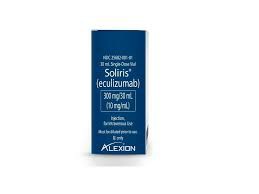
3. Monitor disease manifestations after discontinuation of eculizumab: After discontinuation of treatment for paroxysmal nocturnal hemoglobinuria (PNH), monitor patients for at least 8 weeks after discontinuation of eculizumab to detect hemolysis; after discontinuation of treatment for atypical hemolytic uremic syndrome (aHUS), monitor patients with aHUS for signs and symptoms of thrombotic microangiopathy (TMA) complications for at least 12 weeks. Clinical signs and symptoms of TMA include changes in mental status, seizures, angina, dyspnea, or thrombosis. If TMA complications occur after discontinuation of Soliris, consider reinitiating eculizumab therapy, plasma therapy [plasma exchange, plasmapheresis, or fresh frozen plasma infusion (PE/PI)], or appropriate organ-specific supportive measures.
4. Thrombosis prevention and management The impact of discontinuing anticoagulant therapy during eculizumab treatment has not been determined. Therefore, anticoagulant therapy should not be altered with eculizumab treatment.
5. Infusion-related reactions: including allergic reactions or other hypersensitivity reactions. In clinical trials, no patients experienced infusion-related reactions requiring discontinuation of eculizumab. If signs of cardiovascular instability or respiratory compromise occur, the eculizumab infusion should be interrupted and appropriate supportive measures instituted.
6. Soliris REMS Program: Due to the risk of meningococcal infection, eculizumab is only available through restricted programs under the Risk Assessment and Mitigation Strategy (REMS). Under the eculizumab REMS Act, prescribers are required to participate in the program. Prescribers must inform patients about the risk of meningococcal infection, provide patients with REMS educational materials, and ensure that patients receive the meningococcal vaccine.
[ 免责声明 ] 本页面内容来自公开渠道(如FDA官网、Drugs官网、原研药厂官网等),仅供持有医疗专业资质的人员用于医学药学研究参考,不构成任何治疗建议或药品推荐。所涉药品可能未在中国大陆获批上市,不适用于中国境内销售和使用。如需治疗,请咨询正规医疗机构。本站不提供药品销售或代购服务。


