
.jpeg)
Instructions for Natalizumab
1. Generic name: Natalizumab, Natalizumab
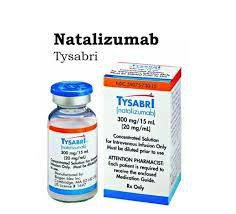
Product name:TYSABRI
2. Indications:
1. Multiple sclerosis (MS):Natalizumab (Natalizumab) is indicated as monotherapy for the treatment of relapsing forms of multiple sclerosis in adults, including clinically isolated syndrome, relapsing-remitting disease, and active secondary progressive disease.
2. Crohn's disease (CD): Natalizumab is indicated for the induction and maintenance of clinical response and remission in adult patients with moderately to severely active Crohn's disease who have insufficient response or intolerance to conventional CD therapies and TNF-α inhibitors. Natalizumab should not be used in combination with immunosuppressants (such as 6-mercaptopurine, azathioprine, cyclosporine, or methotrexate) or TNF-α inhibitors.
Note: Natalizumab increases the risk of progressive multifocal leukoencephalopathy (PML), and when initiating and continuing treatment with natalizumab, physicians should consider whether the expected benefits of natalizumab are sufficient to offset this risk.
3. Usage and dosage:
1. Medication regulations: Only prescribers registered in the TOUCH prescription plan for multiple sclerosis (MS) and Crohn's disease (CD) can prescribe natalizumab to patients.
2. Recommended dose: The recommended dose of natalizumab is 300mg as a one-hour intravenous infusion every four weeks. In patients withCrohn's disease, aminosalicylates may be continued during natalizumab treatment.
3. Dose adjustment: If patients with Crohn's disease still do not achieve efficacy after 12 weeks of induction therapy, natalizumab should be discontinued. For CD patients who start taking natalizumab concurrently with long-term oral corticosteroids, begin tapering the steroid dose once natalizumab has developed a response; if CD patients cannot gradually stop taking oral corticosteroids within six months after starting the drug, discontinue natalizumab. In addition to the initial six-month taper, prescribers should consider discontinuing natalizumab in patients who require more than three additional months of steroid use in a calendar year to control their Crohn's disease.
4. Adverse reactions:
In studies of multiple sclerosis (MS) and Crohn's disease (CD), the most common adverse reactions caused by natalizumab were (≥10%) are headache and fatigue. Other common adverse reactions (≥10%) in patients with MS are arthralgia, urinary tract infection, lower respiratory tract infection, gastroenteritis, vaginitis, depression, limb pain, abdominal discomfort, diarrhea NOS, and rash. Other common adverse reactions in patients with CD (≥10%) are upper respiratory tract infection and nausea. After natalizumab was put on the market, adverse events such as hemolytic anemia and thrombocytopenia (including immune thrombocytopenic purpura) also occurred.
5. Storage:
Natalizumab is an injectable solution and dosage vials must be refrigerated between 2°C and 8°C (36°F and 46°F). Do not use past the expiration date printed on the carton and bottle label. Do not shake or freeze. Avoid light. Store diluted natalizumab solutions refrigerated at 2°C to 8°C (36°F to 46°F). If stored below the specified temperature, allow diluted solutions to warm to room temperature before infusion. Do not freeze.
6. Taboo:
1. Natalizumab is contraindicated in patients who have or have had progressive multifocal leukoencephalopathy (PML);
2. Natalizumab is contraindicated in patients with allergic reactions to natalizumab. Observed reactions range from urticaria to anaphylaxis.
7. Mechanism of action:
Natalizumab binds to the α4 subunit of α4β1 and α4β7 integrins expressed on the surface of all leukocytes except neutrophils and inhibits α4-mediated adhesion of leukocytes to their counterreceptors. Receptors of the integrin α4 family include vascular cell adhesion molecule-1 (VCAM-1) expressed on activated vascular endothelial cells and mucosal addressin cell adhesion molecule-1 (MAdCAM-1) present on vascular endothelial cells in the gastrointestinal tract. Disruption of these molecular interactions prevents leukocyte migration across the endothelium into inflamed parenchymal tissue.
In vitro, anti-α4 integrin antibodies also block α4-mediated cell binding to ligands such as osteopontin and the alternatively spliced domain linker fragment-1 (CS-1) of fibronectin. In vivo, natalizumab can further inhibit the interaction of α4-expressing leukocytes with their ligands on the extracellular matrix and parenchymal cells, thereby inhibiting further recruitment of activated immune cells and inflammatory activity. The specific mechanisms by which natalizumab works in multiple sclerosis and Crohn's disease have not been fully determined.
[ 免责声明 ] 本页面内容来自公开渠道(如FDA官网、Drugs官网、原研药厂官网等),仅供持有医疗专业资质的人员用于医学药学研究参考,不构成任何治疗建议或药品推荐。所涉药品可能未在中国大陆获批上市,不适用于中国境内销售和使用。如需治疗,请咨询正规医疗机构。本站不提供药品销售或代购服务。


