
.jpeg)
What is the difference between Platinib and Seputinib?
Pralsetinib and selpercatinib are U.S. Food and Drug Administration (FDA) oral highly selective RET inhibitors whose accelerated approval was due to the separate evaluation of selpercatinib The pivotal LIBRETTO-001 and ARROW trials of nib and platinib, novel targeted therapies for the treatment of patients with non-small cell lung cancer ((NSCLC)) caused by RET gene rearrangements. Although they have some differences in indications and mechanisms of action, their efficacy and adverse effects are similar.
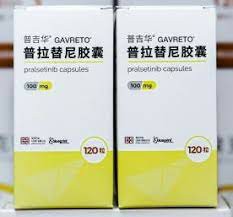
Platinib is approved to treat adult patients withRET gene mutations. These mutations include non-small cell lung cancer (NSCLC) and thyroid cancer. Platinib is a multi-target tyrosine kinase inhibitor that can inhibit multiple mutant or rearranged RET protein kinases. It blocks the proliferation and survival of cancer cells by inhibiting the activity of RET protein kinase. Platinib has shown good efficacy in cancers related to RET gene mutations in clinical trials. It exhibits significant antitumor activity in the treatment of patients with NSCLC and thyroid cancer.
Seputinib is approved to treat adult patients withRET gene mutations. These mutations are involved in thyroid cancer, non-small cell lung cancer (NSCLC), and anaplastic thyroid cancer. Seputinib is also a multi-target tyrosine kinase inhibitor that can inhibit multiple mutant or rearranged RET protein kinases. Seputinib has also shown efficacy in clinical trials against cancers associated with RET gene mutations. It has achieved satisfactory results in the treatment of patients with thyroid cancer and NSCLC.
Both drugs have shown efficacy against brain metastases and are metabolized primarily via hepatic metabolism byCYP3A4. The most common grade 3 or 4 adverse reactions with seputinib were hypertension, increased ALT levels, and increased AST levels, while those with platinib were neutropenia, hypertension, and anemia. The safety profile showed similarities in severity and tolerability, but additional monitoring is recommended for patients taking sepretinib for QT prolongation compared with the risk of interstitial lung disease or pneumonitis in patients taking platinib.
[ 免责声明 ] 本页面内容来自公开渠道(如FDA官网、Drugs官网、原研药厂官网等),仅供持有医疗专业资质的人员用于医学药学研究参考,不构成任何治疗建议或药品推荐。所涉药品可能未在中国大陆获批上市,不适用于中国境内销售和使用。如需治疗,请咨询正规医疗机构。本站不提供药品销售或代购服务。


