
.jpeg)
Learn about the latest clinical trial results for dabrafenib
Clinical trial results of dabrafenib provide important information about this targeted therapy's ability to treat cancers such as malignant melanoma (melanoma) that carry BRAF V600 mutations. These clinical trials are designed to evaluate key indicators such as the safety, tolerability, efficacy and treatment duration of dabrafenib to guide clinical practice and provide patients with more effective treatment options. The following is a review of dabrafenib clinical trial results:
1.Clinical trials on malignant melanoma:
In clinical trials, dabrafenib has shown significant efficacy in the treatment of patients with advanced or metastatic melanoma harboring BRAF V600 mutations. A key clinical trial is COMBI-d and COMBI-v, which evaluated the efficacy and safety of dabrafenib as monotherapy and in combination. These trials have shown that both dabrafenib monotherapy and combination therapy with dabrafenib and tixaban (trametinib) significantly prolonged patients' progression-free survival (PFS) and overall survival (OS), and improved patients' survival rate and quality of life to a certain extent.
2.Clinical trials on non-small cell lung cancer:
Dabrafenib is also in clinical trials for the treatment of non-small cell lung cancer (NSCLC) carrying the BRAF V600 mutation. Although the number of patients is relatively small, some early trial results suggest that dabrafenib may have some efficacy in treating patients with NSCLC who carry the BRAF V600E mutation. However, compared with melanoma, there are relatively few studies in this area and further research is needed to verify it.
3.Research on drug resistance and recurrence:
Although dabrafenib shows good efficacy in initial treatment, patients may develop drug resistance or disease relapse. Some studies have shown that drug resistance may be associated with reactivation of the MAPK pathway, and therefore, combination therapy or combination with other targeted drugs may help extend the duration of treatment and improve therapeutic efficacy.
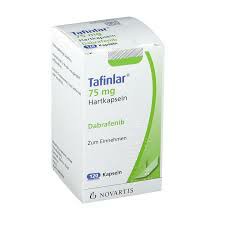
4.Safety and adverse reactions:
Dabrafenib has shown good safety and tolerability in clinical trials. The most common adverse reactions include skin reactions (such as rash, itching, dryness, etc.), fever, fatigue, headache, nausea, vomiting, etc. In addition, some serious adverse reactions have also been reported, such as cardiotoxicity, liver function abnormalities, visual problems, etc. Therefore, patients need to be closely monitored during treatment and report any discomfort symptoms in a timely manner.
5.Future research directions:
Despite the success of dabrafenib in treating melanoma harboring BRAF V600 mutations, many questions remain that require further investigation. This includes an in-depth understanding of resistance mechanisms, optimization of combination treatment strategies, optimization of patient selection criteria, and post-treatment monitoring and management strategies.
Taken together, the clinical trial results of dabrafenib provide important support and guidance for the clinical application of this drug in the treatment of melanoma and other cancers. However, despite some success, further efforts are still needed in future research and clinical practice to optimize treatment strategies, improve treatment effects, and provide patients with better treatment options.
[ 免责声明 ] 本页面内容来自公开渠道(如FDA官网、Drugs官网、原研药厂官网等),仅供持有医疗专业资质的人员用于医学药学研究参考,不构成任何治疗建议或药品推荐。所涉药品可能未在中国大陆获批上市,不适用于中国境内销售和使用。如需治疗,请咨询正规医疗机构。本站不提供药品销售或代购服务。


