
.jpeg)
The role of pemetinib/pemetinib tablets
Cholangiocarcinoma (CCA) is the second most common primary liver cancer after hepatocellular carcinoma (HCC). Progress in the molecular understanding of CCA has led to the development of multiple drugs, including FGFR inhibitors such as pemigatinib, the approval of which marks a new era for this hepatobiliary malignancy.
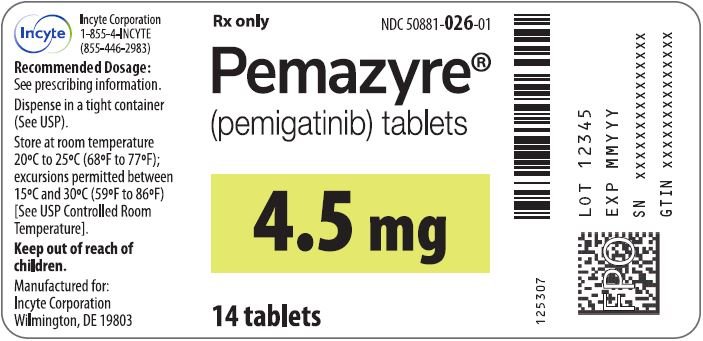
Pemetinib, a selective inhibitor of FGFR1, FGFR2, and FGFR3, is one of two FGFR inhibitors currently approved for the treatment of previously treated metastatic CCA with FGFR2 gene fusions or translocations. In this setting, the role of pemetinib was explored for the first time in the phase 1, two-part FIGHT-101 trial; Part 1 of FIGHT-101 investigated the maximum tolerated dose and pharmacological activity of pemetinib based on elevated serum phosphate levels, while Part 2 aimed to determine the recommended dose of pemetinib in solid tumors with FGFR amplification, translocation, or mutation.
Based on the results of this study,doses in the 1-20 mg range showed dose-proportional increases in maximum steady-state plasma drug concentrations, reinforcing the importance of once-daily dosing. Additionally, no dose-limiting toxicities (DLTs) were reported in Part 1 of the trial, whereas the recommended dose in Part 2 of the trial was 13.5 mg. FIGHT-101 enrolled 128 cancer patients, of which 16.4% had CCAs. Partial responses (PR) were observed in 9.4% of patients, including 5 CCAs. Hyperphosphatemia was the most common treatment-related emergent adverse event (75%), followed by stomatitis (29.7%), alopecia (28.1%), dysgeusia (25.8%), and dry mouth (25.8%).
The subsequent phase II, open-label, multicenter FIGHT-202 trial explored the role of pemetinib (13.5 mg daily, every three weeks) in three different cohorts of pretreated patients, including patients with CCA with FGFR2 fusions or rearrangements, CCA with other FGF/FGFR abnormalities, and CCA without FGF/FGFR abnormalities. The primary endpoint of FIGHT-202 was ORR, which was 35.5% in the FGFR2 fusion/rearrangement patient cohort, with a median duration of response (DOR) of 7.5 months, a median progression-free survival (PFS) of 6.9 months, and a median overall survival (OS) of 21.1 months. In contrast, in the cohort of patients with other FGF/FGFR mutations, the median PFS and OS were 2.1 months and 6.7 months, respectively, and in the cohort of patients without FGF/FGFR mutations, the median PFS and OS were 1.7 months and 4.0 months, respectively.
andSimilar to FIGHT-101, hyperphosphatemia was the most common adverse event (55%), followed by alopecia (46%), dysgeusia (38%), diarrhea (34%), fatigue (31%), and dry mouth (29%). Grade 3 or higher adverse events occurred in 64% of enrolled patients, with grade 3-4 hypophosphatemia being the most common (12%). Similar results were reported in the CIBI375A201 phase trial in China, in which the ORR in previously treated advanced CCA was 60% and the median DOR was 8.3 months. In a study of 31 patients with CCA with FGFR2 fusions or rearrangements, the median PFS was 9.1%.
[ 免责声明 ] 本页面内容来自公开渠道(如FDA官网、Drugs官网、原研药厂官网等),仅供持有医疗专业资质的人员用于医学药学研究参考,不构成任何治疗建议或药品推荐。所涉药品可能未在中国大陆获批上市,不适用于中国境内销售和使用。如需治疗,请咨询正规医疗机构。本站不提供药品销售或代购服务。


