
.jpeg)
What are the precautions for Eltrombopag/Eltrombopag?
In clinical studies of Eltrombopag , warnings and precautions emerged regarding an increased risk of hepatic decompensation, hepatotoxicity, thrombosis/thromboembolic complications, cataracts, death, and myelodysplastic syndrome progression to acute myeloid leukemia in patients with chronic hepatitis C. Discontinue and resume at reduced dose upon recovery, or permanently discontinue based on severity.
1. Liver decompensation in patients with chronic hepatitis C: The combination of eltrombopag with interferon and ribavirin may increase the risk of liver function decompensation. Patients with low albumin levels (<3.5g/dL) or baseline Model for End-Stage Liver Disease (MELD) scores ≥10 in clinical trials were at greater risk for liver decompensation when receiving eltrombopag plus antiviral therapy. If antiviral therapy is discontinued, discontinue eltrombopag.
2. Hepatotoxicity: Eltrombopag may increase the risk of serious and potentially life-threatening hepatotoxicity. For the treatment of thrombocytopenia (ITP), chronic hepatitis C-associated ITP, and refractory severe aplastic anemia (AA), measure serum ALT, AST, and bilirubin every 2 weeks during the dose adjustment phase before initiating eltrombopag and monthly after a stable dose is established.
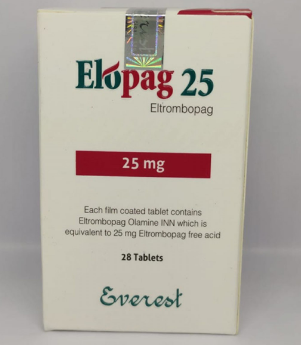
3. Thrombosis/thromboembolic complications: May be caused by increased platelet count. Reported thrombotic/thromboembolic complications include venous and arterial events and are observed with low and normal platelet counts. The possibility of increased thromboembolic risk should be considered when using eltrombopag in patients with known risk factors for thromboembolism (e.g., factor V Leiden, ATIII deficiency, antiphospholipid syndrome, chronic liver disease). To minimize the risk of blood clots/thromboembolic complications, do not use eltrombopag in an attempt to normalize platelet counts. Follow dose adjustment guidelines to achieve and maintain target platelet count.
4. Cataract: In the clinical study of eltrombopag, patients underwent eye examination before treatment, and cataracts appeared or their condition worsened. Cataracts were observed in rodent toxicology studies with eltrombopag. Perform a baseline eye examination before using eltrombopag and monitor patients for signs and symptoms of cataract periodically during treatment.
5. Increased risk of death and myelodysplastic syndrome progression to acute myeloid leukemia: A randomized, double-blind, placebo-controlled multicenter trial in patients with International Prognostic Scoring System (IPSS) grade 1, 2, or high-risk MDS with thrombocytopenia was terminated due to lack of efficacy and safety, including an increased risk of progression to acute myeloid leukemia (AML). Patients received eltrombopag or placebo at a starting dose of 200 mg once daily and a maximum dose of 300 mg once daily in combination with azacitidine for at least 6 cycles. EltrombopagThe incidence of death (overall survival) was 32% in the eltrombopag group compared with 29% in the placebo group, indicating a 42% increase in the relative risk of death in the eltrombopag group in this trial. The incidence of progression to AML was 12% in the eltrombopag group compared with 6% in the placebo group, indicating a 166% increase in the relative risk of progression to AML in the eltrombopag group.
[ 免责声明 ] 本页面内容来自公开渠道(如FDA官网、Drugs官网、原研药厂官网等),仅供持有医疗专业资质的人员用于医学药学研究参考,不构成任何治疗建议或药品推荐。所涉药品可能未在中国大陆获批上市,不适用于中国境内销售和使用。如需治疗,请咨询正规医疗机构。本站不提供药品销售或代购服务。


