
.jpeg)
What is the mechanism of selinesol in treating myelofibrosis?
There has been a breakthrough in the treatment of multiple myeloma (MM). However, the prognosis of multiple myeloma patients who are resistant to immunomodulatory drugs, proteasome inhibitors, and anti-CD38 monoclonal antibodies is extremely poor. Selinexor is an oral nuclear export inhibitor (SINE) that reversibly and selectively binds to cysteine u200bu200b528 in the cargo-binding pocket of XPO1, inactivating its nuclear export function. The antitumor activity of selinesol appears to be mediated through multiple mechanisms:
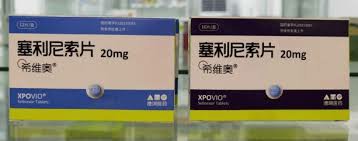
(1) Selinesol inhibitsTSP nuclear export and causes its functional inactivation, thereby promoting apoptotic effects on tumor cells.
(2) Selinesol inhibits the nuclear export of oncoproteinmRNA. As an XPO1 cargo, EIF4E can carry some oncoprotein mRNAs (such as cyclin D1, B-cell lymphoma 2, c-myc) for translation in the cytoplasm. Seleniso blocks the transport of eIF4E-mRNA complex and retains oncoprotein mRNA in the nucleus, thereby reducing the synthesis level of oncoproteins in the cytoplasm.
(3)Selinesol has a synergistic effect with dexamethasone in a glucocorticoid receptor (GR)-dependent manner. Selinisol significantly enhanced the transcription and translation of GR in the presence of dexamethasone, ultimately leading to antitumor activity and cell death.
(4) Selinesol directly inhibits osteoclastogenesis and bone resorption by blocking RANKL-induced nuclear factor kappa B (NF-κB) and nuclear factor of activated T cell c1 (NFATc1), and has little effect on osteoblasts and bone marrow stromal cells.
This mechanism is unique to the treatment of multiple myeloma with nuclear export inhibitors and has been shown to be selectively cytotoxic to tumor cells. Inhibition of XPO1 nuclear export function leads to malignant cell death. However, normal cells are largely unaffected.
[ 免责声明 ] 本页面内容来自公开渠道(如FDA官网、Drugs官网、原研药厂官网等),仅供持有医疗专业资质的人员用于医学药学研究参考,不构成任何治疗建议或药品推荐。所涉药品可能未在中国大陆获批上市,不适用于中国境内销售和使用。如需治疗,请咨询正规医疗机构。本站不提供药品销售或代购服务。


