
.jpeg)
Is selinesol an xpo1 inhibitor?
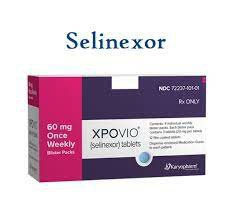
Selinexor (Selinexor) is an XPO1 inhibitor. Selinisol is an oral, first-in-class, slowly reversible, potent selective inhibitor of nuclear export (SINE) compound that specifically blocks exportin 1 (XPO1), a mechanism of action applicable to a variety of tumor types. In mouse models of hematological and solid tumors, tumor reduction and increased survival were observed at doses of selinesol 15-60 mg/m2 (5-20 g/kg). Furthermore, significant synergistic effects were observed when selinesol was combined with various chemotherapy and targeted therapies.
On July 3, 2019, the U.S. Food and Drug Administration (FDA) granted accelerated approval to selinesol in combination with dexamethasone for adult patients with relapsed or refractory multiple myeloma (RRMM) who have received at least four prior therapies and whose disease is refractory to at least two proteasome inhibitors, at least two immunomodulators, and an anti-CD38 monoclonal antibody.
exportin-1 (xpo1) is overexpressed in a variety of malignancies, including multiple myeloma, and in a variety of solid and liquid tumors. XPO1 expression is often associated with advanced disease, resistance to treatment, and poor survival. XPO1 exports tumor suppressor and growth regulatory proteins out of the nucleus. XPO1 also regulates cytoplasmic localization, which in turn regulates the translation of a key proto-oncogene (i.e., myc) in complex with the cargo protein eukaryotic initiation factor 4E (eIF4E). Furthermore, XPO1 is involved in regulating nuclear levels of glucocorticoid receptor (GR).
Selinesol inhibitsXPO1 by blocking each of the above XPO1-mediated mechanisms to promote apoptosis of malignant cells. After XPO1 inhibition, normal cells undergo reversible cell cycle arrest and recover upon removal of the block. Selinisol is orally bioavailable with a half-life (T) of approximately 6-8 hours. Following administration, pharmacokinetic (PK) and pharmacodynamic (PD) data showed induction of XPO1 mRNA and nuclear retention of tumor suppressor proteins such as p53, accompanied by increases in apoptotic markers.
[ 免责声明 ] 本页面内容来自公开渠道(如FDA官网、Drugs官网、原研药厂官网等),仅供持有医疗专业资质的人员用于医学药学研究参考,不构成任何治疗建议或药品推荐。所涉药品可能未在中国大陆获批上市,不适用于中国境内销售和使用。如需治疗,请咨询正规医疗机构。本站不提供药品销售或代购服务。


