
.jpeg)
Efficacy and dosage recommendations of ensidipine in the treatment of AML
Enasidenib (Enasidenib), as a targeted therapy, has shown significant efficacy in patients with acute myeloid leukemia (AML) who carry IDH2 gene mutations. The following will elaborate on the efficacy and dosage recommendations of ensidipine in the treatment of AML based on clinical trial data.
Evidence of efficacy:
A pivotal clinical trial of ensidipine in AML is AG221-C-001 (NCT01915498), a multicenter, open-label, single-arm, Phase I/II trial. The trial was designed to evaluate the safety, tolerability and efficacy of ensidipine. Among them, the primary endpoints include complete response rate (CR) and partial response rate (PR), as well as progression-free survival (PFS) and overall survival (OS).
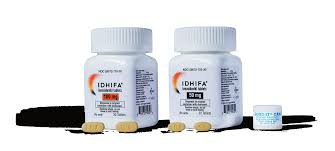
In this trial, patients received a daily oral dose of 100 mg (mg) of ensidipine. The results showed that among 88 patients who received treatment, the complete response rate was 19.3% and the partial response rate was 15.9%. The overall response rate (including complete and partial responses) was 35.2%. In addition, patients had a median progression-free survival of 4.3 months and a median overall survival of 9.3 months.
In addition, a randomized, double-blind, placebo-controlled clinical trial of ensidipine in the treatment of AML is IDHENTIFY (NCT02577406 ). In this experiment,AMLPatients were randomly assigned to receive ensidipine or placebo. The results showed that the complete response rate was 19.7% in the ensidipine group and 0% in the placebo group. The median progression-free survival (PFS) was 5.8 months in the ensidipine group and 1.4 months in the placebo group.
The results of these clinical trials indicate that ensidipine has some efficacy in the treatment ofAML and demonstrates significant clinical benefit relative to placebo.
Dosage recommendations:
Based on clinical trials and clinical practice experience, the recommended dose of ensidipine is 100mg orally administered daily (mg). Patients are usually advised to take it after meals to reduce the occurrence of gastrointestinal adverse reactions. Dose adjustment should be based on the patient's liver function status and drug tolerance. In patients with severe side effects or impaired liver function, dose reduction or treatment suspension may be necessary.
In addition, patients need to be closely monitored for clinical responses and side effects during treatment, and hematology and liver function tests need to be performed regularly. Depending on the patient's specific situation, the doctor may consider whether to adjust the dose or discontinue the drug based on efficacy and safety.
Overall, ensidipine demonstrated good efficacy and safety in the treatmentAML. The recommended dose is 100 mg taken orally daily, but in actual application it needs to be individually adjusted according to the patient's condition, and the efficacy and side effects must be regularly monitored to ensure the effectiveness and safety of the treatment.
[ 免责声明 ] 本页面内容来自公开渠道(如FDA官网、Drugs官网、原研药厂官网等),仅供持有医疗专业资质的人员用于医学药学研究参考,不构成任何治疗建议或药品推荐。所涉药品可能未在中国大陆获批上市,不适用于中国境内销售和使用。如需治疗,请咨询正规医疗机构。本站不提供药品销售或代购服务。


