
.jpeg)
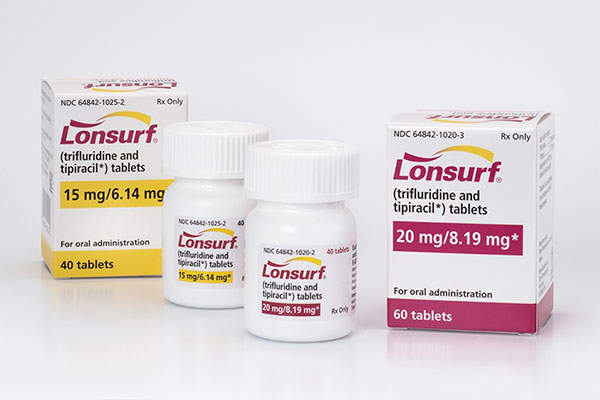
Effects of the Japanese chemotherapy drug trifluridine and tipiracil (Lansifer)
The RECOURSE study demonstrated the efficacy and safety of trifluridine and tipiracil (Lonsurf) in metastatic colorectal cancer. The study is a multinational, randomized, double-blind, Phase 3 clinical trial comparing the efficacy and safety of trifluridine tipiracil with placebo in patients with metastatic disease refractory to anti-tumor therapy.
Among the 800 patients in the study, 534 patients received best supportive care with oral trifluridine tipiracil (35 mg/m2), and 266 patients received placebo plus best supportive care. The treatment is based on a treatment cycle of 28 days, 5 days a week, twice a day with breakfast and dinner, 2 days of rest for 2 consecutive weeks, and then 14 days of rest. All patients received best supportive care but no other investigational antineoplastic agents or chemotherapy, hormonal therapy, or immunotherapy. Patients were assessed every 2 weeks while on treatment and every 8 weeks from discontinuation of treatment until death or until the clinical trial data collection deadline.
The primary endpoint is overall survival and the secondary endpoint is progression-free survival. Patients were stratified according to tumor KRAS status (wild-type vs KRAS mutated), time to first diagnosis of metastasis and study randomization (<18 months vs ≥18 months), and country of origin. Demographic and baseline characteristics were similar between treatment groups. The majority of patients (median age 63 years) were male (61%) and white (58%), with an ECOG performance status of 0 (56%). KRAS mutations were present in 51% of patients, and more than 60% had received ≥4 prior treatments for metastatic colorectal cancer. In addition, 93% of patients treated with trifluridine-tipiracil had disease refractory to fluoropyrimidine-based treatments.
Overall survival and progression-free survival were significantly improved in patients who received oral trifluridine and best supportive care compared with patients who received placebo plus best supportive care. Median overall survival was 7.1 months for patients who received trifluridine and 5.3 months for placebo, a significant difference (hazard ratio [HR], 0.68; 95% confidence interval [CI], 0.58-0.81; p<0.001). Median progression-free survival was 2.0 months in the trifluridine-tipiracil group and 1.7 months in the placebo group (HR, 0.47; 95% confidence interval, 0.40-0.55; p<0.001).
The clinical benefit observed with trifluridine-tipiracil was consistent in prespecified patient subgroups, including patients with fluorouracil-refractory disease when administered as part of a treatment regimen before study entry, and those who received regorafenib. After randomization at least Disease control rates (complete response, partial response, stable disease) assessed at 6 weeks were achieved in 44% of trifluridine-tipiracil recipients and 16% of placebo recipients (p<0.001).
[ 免责声明 ] 本页面内容来自公开渠道(如FDA官网、Drugs官网、原研药厂官网等),仅供持有医疗专业资质的人员用于医学药学研究参考,不构成任何治疗建议或药品推荐。所涉药品可能未在中国大陆获批上市,不适用于中国境内销售和使用。如需治疗,请咨询正规医疗机构。本站不提供药品销售或代购服务。


