
.jpeg)
Has anyone used imported obeticholic acid?
Obeticholic acid (Obeticholic acid) is a semi-synthetic modified bile acid derivative that acts on the farnesoid X receptor (FXR) as a more potent agonist than bile acids. FXR is a nuclear receptor highly expressed in the liver and small intestine that regulates bile acids, cholesterol, glucose metabolism, inflammation, and apoptosis. The bile acid receptor FXR group is currently studying its potential role in the treatment of primary biliary cirrhosis (PBC), non-alcoholic steatohepatitis (NASH) and primary sclerosing cholangitis (PSC).
Recent clinical studies suggest that obeticholic acid may act synergistically with lipid-lowering drugs to further improve long-term prognosis in primary sclerosing cholangitis. Specifically, obeticholic acid improves morbidity and mortality in patients with primary biliary cirrhosis. This improvement is manifested by improved histological examination and a reduced need for transplantation.
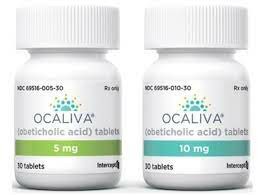
A clinical trial called thePOISE trial tested whether obeticholic acid could reduce alkaline phosphatase and bilirubin levels. The POISE trial found that daily doses of obeticholic acid up to 50 mg resulted in greater reductions in alkaline phosphatase and bilirubin levels. However, there is a dose-related increase in pruritus, especially at doses greater than 10 mg. At 12 months, there was no significant difference in liver fibrosis between the treatment or placebo groups. In contrast, patients with PBC treated with obeticholic acid had a higher incidence of pruritus.
A post hoc analysis using POISE trial data showed that 37% of patients in the 5-10 mg obeticholic acid group and 35% of patients in the 10 mg obeticholic acid group improved in more than one liver disease stage compared with 12% in the placebo group. Additionally, 10% and 0% of patients in the 5-10 mg and 10 mg obeticholic acid groups experienced disease progression, respectively, compared with 37% of patients in the placebo group.
Obeeticholic acid is a well-tolerated drug in most patients and does not disrupt the activity, metabolism, or excretion of other drugs. By activatingFXR to upregulate bile salt excretion in the bile system, obeticholic acid reduces bile acid synthesis through various methods and improves the prognosis of PBC patients. Activation of FXR slows down fatty acid and cholesterol metabolism. Furthermore, activation of FXR reduces fibrosis and suppresses inflammation, which favors PBC development and progression. After obeticholic acid was approved for marketing in the United States and other regions, it has been suitable for patients with persistently elevated alkaline phosphatase who are resistant to ursodeoxycholic acid (UDCA) treatment.
Overall, obeticholic acid (Obeticholic acid is a drug used to treat certain liver diseases. Some patients have used this medication and had positive results. However, the effect of the drug may vary from person to person, and the specific effect needs to be determined based on the patient's specific situation and the guidance of the doctor.
[ 免责声明 ] 本页面内容来自公开渠道(如FDA官网、Drugs官网、原研药厂官网等),仅供持有医疗专业资质的人员用于医学药学研究参考,不构成任何治疗建议或药品推荐。所涉药品可能未在中国大陆获批上市,不适用于中国境内销售和使用。如需治疗,请咨询正规医疗机构。本站不提供药品销售或代购服务。


