
.jpeg)
The difference between capmatinib and lenvatinib
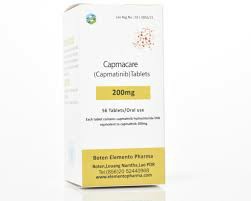
Capmatinib (Capmatinib) is a targeted therapy specifically approved for the treatment of adult patients with non-small cell lung cancer (NSCLC) who have mutations that cause MET exon 14 skipping, providing personalized treatment options for this genetic alteration. Lenvatinib, on the other hand, is approved for differentiated thyroid cancer, renal cell carcinoma, and endometrial cancer in combination with everolimus, and it inhibits the activity of the VEGFR, FGFR, PDGFR, RET, and KIT signaling pathways. When deciding between the two, it's important to consider the specific type of cancer being treated, the patient's overall health, and the side effects of each drug, and to consult with a doctor.
Capmatinib isa targeted therapy drug approved by the FDA for the treatment of adult patients with metastatic non-small cell lung cancer. It is specifically indicated for patients whose tumors have mutations that cause mesenchymal-to-epithelial transition (MET) exon 14 skipping, as detected by an FDA-approved test. The efficacy of capmatinib was confirmed in a clinical trial in which patients with this specific genetic marker showed a significant response to the treatment. An overall response rate (ORR) of approximately 68% in previously untreated patients and approximately 41% in previously treated patients was observed, demonstrating its potential as a first-line or follow-on treatment for MET exon 14 skipped non-small cell lung cancer.
Lenvatinib is another targeted therapy approved to treat certain types of thyroid cancer. It is suitable for the treatment of locally recurrent or metastatic, progressive, radioactive iodine-refractory differentiated thyroid cancer (RAI-R DTC). Lenvatinib's approval was based on a phase III clinical trial, the so-called SELECT study, which showed that lenvatinib significantly extended progression-free survival compared with placebo. Median progression-free survival was 18.3 months for patients who received treatment compared with 3.6 months for patients who received placebo, indicating a significant improvement in disease management.
Lenvatinib is also being evaluated in a phase II study in advanced medullary thyroid carcinoma (MTC). While the study showed some clinical activity, the results were not as robust as those seen in differentiated thyroid cancer. Therefore, the main indication for lenvatinib remains the treatment of RAI-R DTC, and it has become an important treatment option for patients with this challenging disease.
In summary, capmatinib and lenvatinib are both oral tyrosine kinase inhibitors used to treat certain types of cancer, but they have different U.S. Food and Drug Administration (FDA)-approved indications and mechanisms of action. Patients must be under the guidance of a doctor when using two drugs.
[ 免责声明 ] 本页面内容来自公开渠道(如FDA官网、Drugs官网、原研药厂官网等),仅供持有医疗专业资质的人员用于医学药学研究参考,不构成任何治疗建议或药品推荐。所涉药品可能未在中国大陆获批上市,不适用于中国境内销售和使用。如需治疗,请咨询正规医疗机构。本站不提供药品销售或代购服务。


