
.jpeg)
What is the efficacy of Enfortumab in treating urothelial cancer?
Enfortumab is a targeted therapy drug used to treat advanced or metastatic urothelial cancer (urothelial cancer), especially in patients who have previously received platinum chemotherapy and PD-1/PD-L1 inhibitors but whose disease still progresses. The following will explore the efficacy of ennosumab in the treatment of urothelial cancer based on clinical trial data.
1. Clinical trial design:
A pivotal clinical trial isEV-201, a Phase II single-arm, multicenter clinical trial evaluating the safety and efficacy of ennozumab in patients with advanced urothelial cancer. Inclusion criteria for patients included advanced or metastatic urothelial cancer, previous treatment with platinum-based chemotherapy and PD-1/PD-L1 inhibitors and disease progression.
2. Clinical trial results:
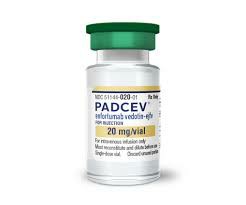
According to the trial results, ennosumab demonstrated significant clinical response rates and sustained efficacy. Data show that in the EV-201 trial, the clinical response rate of ennosumab in the overall study population was 44%, of which 15% of patients achieved complete remission and 29% of patients achieved partial remission. In addition, when the duration of clinical response was analyzed, it was found that 68% of patients had a clinical response lasting more than 6 months.
Another pivotal clinical trial isEV-301, a phase III, randomized, multicenter, open-label trial comparing the efficacy and safety of ennozumab with chemotherapy (such as docetaxel or paclitaxel) in patients with advanced urothelial cancer. The trial results showed that the overall survival of the ennosumab treatment group was significantly better than that of the chemotherapy group, with an HR of 0.70 (95% CI, 0.56-0.89;p=0.001), indicating that ennosumab treatment can significantly prolong the survival of patients. In addition, the median progression-free survival (mPFS) of the ennosumab group was also significantly better than that of the chemotherapy group, which was 5.6 months versus 3.7 months (HR 0.62, 95% CI, 0.51-0.75).
3. Security:
Regarding the safety of ennozumab, clinical trials have shown that it has good safety. Common adverse reactions mainly include fatigue, nausea, anemia, proteinuria, rash, etc. Most adverse reactions are mild to moderate and can be controlled with appropriate handling and management. A small number of patients may experience serious adverse reactions, such as allergic reactions, pulmonary toxicity, etc., but the incidence is low.
Based on clinical trial data, ennosumab has demonstrated significant clinical efficacy and a favorable safety profile in patients with advanced urothelial cancer. It has a high clinical response rate and a long duration, which can significantly extend the patient's survival, and common adverse reactions are usually mild to moderate. Therefore, ennosumab is considered an important treatment option, bringing new hope to patients with advanced urothelial cancer.
[ 免责声明 ] 本页面内容来自公开渠道(如FDA官网、Drugs官网、原研药厂官网等),仅供持有医疗专业资质的人员用于医学药学研究参考,不构成任何治疗建议或药品推荐。所涉药品可能未在中国大陆获批上市,不适用于中国境内销售和使用。如需治疗,请咨询正规医疗机构。本站不提供药品销售或代购服务。


