
.jpeg)
Instructions for use of Acalatinib/Acalatinib capsules
1. Generic name: Acalabrutinib,Acalabrutinib
Product name:CALQUENCE, Kangkeqi
Other names: acalabrutinib, acalabrutinib, clonucan, ACP-196
2. Indications:
1. Mantle cell lymphoma (MCL): Acalabrutinib is suitable for the treatment of adult patients with mantle cell lymphoma who have received at least one treatment in the past.
2. Chronic lymphocytic leukemia (CLL) or small lymphocytic lymphoma (SLL): Acotinib is suitable for the treatment of adult patients with chronic lymphocytic leukemia or small lymphocytic lymphoma.
3. Usage and dosage:
1. Recommended dosage:
(1) As monotherapy, the recommended dose of acotinib in patients with MCL disease, CLL disease, or SLL disease is 100 mg orally every 12 hours until disease progression or unacceptable toxicity.
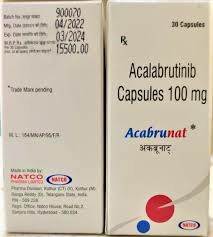
(2) can be used as a combination drug with obinutuzumab. For patients with previously untreated CLL or SLL, it is recommended that 100 mg of acotinib be taken orally every 12 hours until disease progression or unacceptable toxicity occurs. Calculation starts at period 1 (each period is 28 days). Start using otuzumab in Cycle 2 for a total of 6 cycles and refer to its prescribing information for recommended dosage. If both drugs are administered on the same day, acotinib should be given before otuzumab.
2. Medication management: Patients are advised to swallow the entire capsule with water; patients are advised not to open, break or chew the capsule; acotinib can be taken with or without food. If a dose is missed by more than 3 hours, the dose should be skipped and the next dose should be taken at the regularly scheduled time. Additional acotinib capsules should not be taken to make up for a missed dose.
4. Adverse reactions:
In clinical studies of acotinib,The most common adverse reactions (≥20%) in patients with MCL disease were anemia, thrombocytopenia, headache, neutropenia, diarrhea, fatigue, myalgia and bruising; in patients with CLL disease or SLL disease, joint pain, dizziness and constipation were also common.
5. Supply and storage:
Acalabrutinib capsules for oral administration contain 100 mg acalabrutinib and can be stored at 20°C-25°C (68°F-77°F); tolerance is 15°C-30°C (59°F-86°F).
6. Special groups:
1. Women: Pregnant women taking acotinib may cause embryo-fetal damage and dystocia; it is recommended that female patients of childbearing potential use effective contraceptive measures during treatment and for at least 1 week after the last dose of this product; lactating women should not breastfeed during treatment and for at least 2 weeks after the last dose.
2. Liver damage: Patients with severe liver damage should avoid using acotinib. The safety of acotinib has not been evaluated in patients with moderate or severe hepatic impairment.
7. Mechanism of action:
Acotinib is a small molecule inhibitor of BTK. Acotinib and its active metabolite ACP-5862 form covalent bonds with the cysteine u200bu200bresidues in the active site of BTK, thereby inhibiting BTK enzyme activity. BTK is a signaling molecule of the B cell antigen receptor (BCR) and cytokine receptor pathways. In B cells, BTK signaling leads to the activation of pathways necessary for B cell proliferation, trafficking, chemotaxis, and adhesion. In nonclinical studies, acotinib inhibited BTK-mediated activation of downstream signaling proteins CD86 and CD69 and inhibited malignant B cell proliferation and tumor growth in mouse xenograft models.
[ 免责声明 ] 本页面内容来自公开渠道(如FDA官网、Drugs官网、原研药厂官网等),仅供持有医疗专业资质的人员用于医学药学研究参考,不构成任何治疗建议或药品推荐。所涉药品可能未在中国大陆获批上市,不适用于中国境内销售和使用。如需治疗,请咨询正规医疗机构。本站不提供药品销售或代购服务。


