
.jpeg)
How does Teriflunomide tablets work?
In multiple sclerosis, the body's immune system malfunctions and attacks parts of the central nervous system (the brain and spinal cord), causing inflammation and damaging the nerve sheaths. Teriflunomide blocks an enzyme called dihydrogenase dehydrogenase, which is necessary for cell reproduction. The exact way the drug works in multiple sclerosis is not yet known, but it is thought to reduce the number of lymphocytes, which are part of the immune system and are involved in the inflammatory process. Lymphocytes are reduced and inflammation is reduced, helping to control the symptoms of multiple sclerosis.
Teriflunomide tablets have been studied in five major studies involving more than 2,900 people with relapsing-remitting multiple sclerosis.
A study involving179 adults compared the effects of teriflunomide tablets and a placebo (a dummy treatment) on the number of active lesions (areas of developing damage) in the brain detected on brain scans. The study found that teriflunomide was more effective than placebo: after about nine months (36 weeks), patients taking teriflunomide had about 1 active lesion per scan, compared with about 2.7 active lesions per scan for those taking placebo.
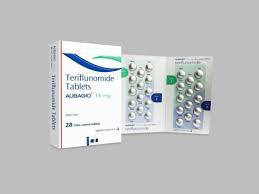
Two studies involving2,257 adults compared teriflunomide tablets with placebo in reducing the number of relapses per patient per year (called the "annualized relapse rate"). Treatment lasted approximately 3 years (152 weeks). The study found that teriflunomide was more effective than placebo: among patients who took teriflunomide, relapse rates were about 30% lower than those who took placebo (the annual relapse rate for teriflunomide was 0.35, compared with 0.53 for placebo). The study also looked at the effect of teriflunomide tablets on changes in patients' disability levels, showing that after about two and a half years (132 weeks) of treatment, there was a 30% reduction in the risk of worsening disability compared with placebo.
The fourth study, involving 324 adults, compared the impact of teriflunomide tablets with interferon beta-1a (another treatment for MS) on treatment failure rates by looking at when patients first relapsed or permanently stopped treatment. The study lasted two years. The results of this study are inconclusive. The permanent discontinuation rate for patients taking teriflunomide tablets was 13.5%, while the permanent discontinuation rate for patients taking interferon beta-1a was 24%. However, the recurrence rate of teriflunomide tablets was 23.4%, while the recurrence rate of interferon beta-1a was 15.4%. Overall, this study did not draw any conclusions about the difference between teriflunomide tablets and interferon beta-1a in the treatment of MS.
Another study involving 166 children (ages 10-17) was inconclusive, but it did show that teriflunomide prolonged the time to relapse or development of brain lesions (about 72 weeks in the teriflunomide group versus 37 weeks in the placebo group). Overall, data from adults and the results of this study support the use of teriflunomide in children (10 years and older) with relapsing-remitting MS.
In summary, teriflunomide tablets have been shown to reduce relapses and delay the progression of disability in patients with relapsing-remitting multiple sclerosis. Although the effect was limited, it was still considered significant and similar to other multiple sclerosis treatments, although direct comparisons with interferon β-1a were inconclusive. Currently, patients can purchase original drugs from domestic pharmacies based on medical advice. The specific selling price varies depending on pharmacy pricing and medical insurance policies. In addition, its generic drugs are also sold in the Indian market, and the prices are relatively affordable.
[ 免责声明 ] 本页面内容来自公开渠道(如FDA官网、Drugs官网、原研药厂官网等),仅供持有医疗专业资质的人员用于医学药学研究参考,不构成任何治疗建议或药品推荐。所涉药品可能未在中国大陆获批上市,不适用于中国境内销售和使用。如需治疗,请咨询正规医疗机构。本站不提供药品销售或代购服务。


