
.jpeg)
ALK lung cancer targeting drug lorlatinib (lorlatinib)
Lorlatinib (Lolatinib) is a fourth-generation ALK (anaplastic lymphoma kinase) inhibitor primarily used to treat patients with ALK-positive non-small cell lung cancer (NSCLC). It was developed by Pfizer and approved by the U.S. Food and Drug Administration (FDA) in 2018 for the treatment of patients whose disease has progressed after treatment with other ALK inhibitors such as crizotinib, alectinib, ceritinib, or brigatinib.
Lorlatinib is unique in its potent and broadALK inhibition. ALK Gene rearrangement is an important driver in non-small cell lung cancer, leading to abnormal proliferation and survival of cancer cells. Lorlatinib blocks these signaling pathways by highly selectively inhibiting ALK kinase activity, thereby inhibiting tumor growth and spread.
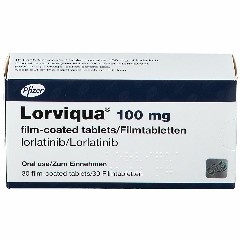
In addition,lorlatinib (lorlatinib) can penetrate the blood-brain barrier and has a significant effect on ALKpositiveNSCLC patients with brain metastasis. This is particularly important because approximately 30-50% of patients with ALK-positive NSCLC will develop brain metastases.
The efficacy and safety of lorlatinib have been verified in a series of clinical trials. Pivotal clinical trials include a multicenter, open-label, dose-escalation and expansion study codenamed B7461001. This study evaluated the efficacy and safety of lorlatinib (lorlatinib) at different doses and showed significant inhibition of multiple ALK mutations.
In a pivotalPhase 2 clinical trial,lorlatinib had been treated with at least one prior generationALKPatients who progressed on inhibitor therapy demonstrated higher objective response rates (ORR) and median progression-free survival (PFS). Specific data showed that 48% of patients treated with lorlatinib achieved partial or complete response, and the median PFS was 7.3 months. In addition, lorlatinib (lorlatinib) also demonstrated significant efficacy in patients with brain metastases, CNSthe overall response rate reached 60%.
In short,lorlatinib (lorlatinib) plays an important role in the treatment ofALK-positive non-small cell lung cancer, and its clinical application has significantly improved the survival rate and quality of life of patients. As research progresses, more innovative drugs may become available in the future, bringing better treatment prospects to patients.
[ 免责声明 ] 本页面内容来自公开渠道(如FDA官网、Drugs官网、原研药厂官网等),仅供持有医疗专业资质的人员用于医学药学研究参考,不构成任何治疗建议或药品推荐。所涉药品可能未在中国大陆获批上市,不适用于中国境内销售和使用。如需治疗,请咨询正规医疗机构。本站不提供药品销售或代购服务。


