
.jpeg)
How effective is the lung cancer targeted drug Mobotinib succinate (Moboxetinib)?
The lung cancer targeted drug Mobotinib succinate (Mobosetinib) has significant efficacy, bringing new treatment hope to patients with non-small cell lung cancer (NSCLC) with EGFR 20 insertion mutations.
Mobosetinib is mainly targeted at EGFR 20 exon insertion mutationsNSCLC patients. Although this type of mutation is rare in lung cancer, it is difficult to treat. The development and application of moboxetinib provides a more precise treatment plan for these patients.
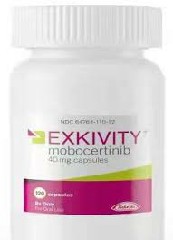
According to clinical trial results, mobosetinib can treat patients with EGFR who have received platinum-based chemotherapy and have disease progression For patients with exon 20 insertion mutationsNSCLC, the objective response rate (ORR) can reach< /span>28% (investigator-estimated ORR was 35%). This means that nearly one-third of patients had their tumors significantly shrunk or controlled after using mobosertinib.
Mobosetinib can not only improve the objective response rate, but also significantly extend the survival time of patients. Clinical trial data show that the median progression-free survival (PFS) of patients treated with moboxetinib is 7.3 months, and the median overall survival (OS) is 24.0 months. These data fully demonstrate the excellent performance of mobosetinib in prolonging patient survival.
In addition to improving the objective response rate and prolonging survival, mobosetinib also has a good disease control rate (DCR). In clinical trials, the DCR was as high as 78%, which means that the condition of the vast majority of patients was effectively controlled after using moboxetinib, further proving the efficacy of the drug.
[ 免责声明 ] 本页面内容来自公开渠道(如FDA官网、Drugs官网、原研药厂官网等),仅供持有医疗专业资质的人员用于医学药学研究参考,不构成任何治疗建议或药品推荐。所涉药品可能未在中国大陆获批上市,不适用于中国境内销售和使用。如需治疗,请咨询正规医疗机构。本站不提供药品销售或代购服务。


