
.jpeg)
FDA expands indication for entrectinib in children with NTRK+ solid tumors
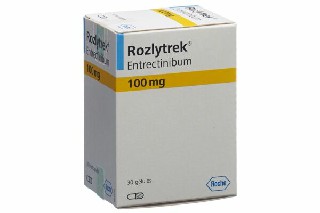
The U.S. Food and Drug Administration (FDA) has granted accelerated approval to entrectinib for pediatric patients 1 month of age and older with solid tumors that harbor NTRK gene fusions, have no known acquired resistance mutations, are metastatic, or for which surgical resection would be likely to result in severe morbidity, have progressed well with treatment, or have no satisfactory standard treatment options. Regulators also approved a new oral granule formulation.
This decision is supported by findings from 33 pediatric patients who participated in one of two multicenter single-arm clinical trials: the Phase 1/2 STARTRK-NG trial (NCT02650401) or the Phase 2 TAPISTRY trial (NCTO 4589845). Patients received body surface area-based treatment with entrectinib once daily in doses ranging from 20 mg to 600 mg, administered orally or via enteral feeding tubes in 4-week cycles. Entrectinib induced an overall response rate (ORR) of 70% (95% CI, 51%-84%) in these patients, including a complete response rate of 42% and a partial response rate of 27%. The drug's median duration of response (DOR) was 25.4 months (95% CI, 14.3 not evaluable), with 43% of patients experiencing responses lasting at least 12 months.
AboutSTARTRK-NG and TAPISTRY, this open-label, multicenter trial enrolled pediatric patients with unresectable or metastatic solid tumors harboring NTRK gene fusions who had measurable or evaluable disease at baseline and who had not been previously exposed to a TRK inhibitor. To be included in the analysis, they needed to have taken at least 1 dose of entrectinib and be followed for at least 6 months. The trial's primary efficacy outcome was ORR as determined by blinded independent review (BICR) and met RECIST v1.1 criteria for extracranial tumors and RANO criteria for primary central nervous system tumors. Another efficacy endpoint of interest was DOR, which was also assessed by BICR.
When broken down by tumor type, entrectinib induced an ORR of 53% (95% CI, 28%-77%) in patients with primary central nervous system disease (n=17), with a DOR ranging from 5.5 months to more than 30.4 months. In patients with infantile fibrosarcoma (n=8), the ORR with this agent was 88% (95% CI, 47%-100%), and the DOR ranged from 3.7+ months to 24+ months. In patients with spindle cell disease (n=6), the ORR was 100% (95% CI, 54%-100%), and the DOR ranged from 3.7+ months to 12.9+ months. One patient with melanoma also responded to treatment, with a DOR of more than 42.4 months. Sarcoma patients did not respond to entrectinib.
When examining efficacy based onNTRK partners, ETV6-NTRK3, LMNA-NTRK1, TPM3-NTRK 1. The ORRs of patients with TPR-NTRC1 and EML4-NTRC3 were 86% (95%CI, 42%-100%), 80% (95%CI, 28%-99%), 100% (95%CI, 29%-100%), 67% (95%CI, 9%-99%) and 50% (95%CI, 1.3%-99%) respectively.
The drug's safety was examined in 76 pediatric patients, 68 in STARTRK-NG, 6 in TAPISTRY, and 2 in the Phase 2 STARTRK-2 trial (NCT02568267). Fifty-eight percent of patients were exposed to entinib for at least 6 months, and 38% were exposed for at least 1 year. Serious adverse reactions (AEs) occurred in 45% of patients, including fractures (12%), pneumonia (5%), pyrexia (5%) and hydrocephalus (5%), device-related infection (4%), hypoxia (4%), dyspnea (3%), headache (3%), gait disturbance (3%) and pain (3%). AEs resulted in dose interruption and reduction in 39% and 21% of patients, respectively.
The most common AEs, occurring in at least 20% of pediatric patients in 1 of 3 trials, were pyrexia (any grade, 43%; Grade 3/4, 1.3%), fatigue (30%; 2.6%), constipation (41%; 1.3%), vomiting (38%; 0%), diarrhea (37%; 0%), nausea (34%; 0%); abdominal pain (34%; 0%); 20%; 2.6%), weight gain (39%; 18%), cough (33%; 1.3%), nasal congestion (20%; 0%) and pain in extremities (26%; 2.6%); fractures (2 5%; 11%), reduce appetite (24%; 1.3%), headaches (22%; 2.6%), upper respiratory tract infections (20%; 1.3%) and urinary tract infections (20%; 2.6%).
In one of the trials, at least20% of patients who received the drug experienced laboratory abnormalities that were more severe than baseline, including decreases in hemoglobin (any grade, 53%; Grade 3/4, 7%), neutrophils (53%; 22%), white blood cells (46%; 1.3%), and lymphocytes (33%; 3%); creatinine (84%) ; 5%), aspartate aminotransferase (61%; 2.7%), alanine aminotransferase (53%; 2.6%), sodium (38%; 1.4%), magnesium (32%; 5%), alkaline phosphatase ( 25%; 0%), glucose (26%; 0%), potassium (25%; 2.7%), albumin (24%; 9%), calcium (21%; 8%), and bilirubin (20%; 8%) were increased.
[ 免责声明 ] 本页面内容来自公开渠道(如FDA官网、Drugs官网、原研药厂官网等),仅供持有医疗专业资质的人员用于医学药学研究参考,不构成任何治疗建议或药品推荐。所涉药品可能未在中国大陆获批上市,不适用于中国境内销售和使用。如需治疗,请咨询正规医疗机构。本站不提供药品销售或代购服务。


