
.jpeg)
Ivonib approved to treat certain myelodysplastic syndromes
Last October, the U.S. Food and Drug Administration (FDA) officially announced that ivosidenib (trade name Tibsovo, produced by Servier Pharmaceuticals LLC) has been approved for the treatment of adult patients with relapsed or refractory myelodysplastic syndrome (MDS) whose cases require isocitrate dehydrogenase-1 (IDH1) mutations confirmed by an FDA-approved test. At the same time, the U.S. FDA also approved the Abbott RealTime IDH1 Assay as an auxiliary diagnostic tool to screen patients suitable for treatment with ivonib.
The basis for this approval comes from an open-label, single-arm, multi-center clinical study namedAG120-C-001 (NCT02074839). A total of 18 adult patients with relapsed or refractory MDS with IDH1 mutations were included in the study. These patients had IDH1 mutations detected in peripheral blood or bone marrow by local or central diagnostic testing and retrospectively confirmed with the Abbott RealTime IDH1 Assay.
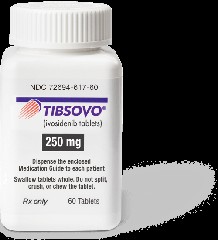
In the study, patients received oral treatment with 500 mg of ivonib daily, with a treatment cycle of 28 days, and continued treatment until disease progression, unacceptable toxicity, or the patient received hematopoietic stem cell transplantation. The median duration of treatment was 9.3 months, and one patient also received a stem cell transplant after taking ivosidenib.
Efficacy evaluation is mainly based on complete remission (CR) or partial remission (PR) rate (according to the 2006 International Working Group response criteria for MDS), duration of CR+PR, and conversion rate from transfusion dependence to transfusion independence. The study results showed that all observed responses achieved CR, with the CR rate as high as 38.9% (95% confidence interval: 17.3%-64.3%). The median time to CR was 1.9 months (range, 1.0 to 5.6 months), whereas the duration of median CR could not be accurately estimated (range, 1.9 months to over 80.8 months). Of the 9 patients (67%) who were dependent on red blood cell (RBC) and/or platelet transfusions at baseline, 6 (67%) became transfusion-free during any subsequent 56-day period. Of the 9 patients who were transfusion independent at baseline, 7 (78%) remained transfusion independent during any subsequent 56-day period.
Common adverse reactions during the treatment of ivonib are similar to those observed in the treatment of acute myeloid leukemia (AML), mainly including gastrointestinal toxicity (such as diarrhea, constipation, mucositis and nausea), joint pain, fatigue, cough, myalgia and rash. In addition, ivonib may cause QTc prolongation.
Currently, Avonib is on the domestic market, but has not yet been included in medical insurance. Avosidenib on the domestic market is the original research version. Each box contains 250mg*60 tablets and is priced at more than 90,000 yuan. For patients looking for a more economical option, overseas versions of ivosidenib may also be considered. Overseas versions of Avonib are divided into two types: original research and imitation. The price of the original version is as high as 260,000 yuan, while the price of the imitation version listed in Lucius, Laos is much more affordable, only about 6,800 yuan. For more questions or needs about ivonib, it is recommended to consult professional overseas medical experts for more detailed information and advice.
[ 免责声明 ] 本页面内容来自公开渠道(如FDA官网、Drugs官网、原研药厂官网等),仅供持有医疗专业资质的人员用于医学药学研究参考,不构成任何治疗建议或药品推荐。所涉药品可能未在中国大陆获批上市,不适用于中国境内销售和使用。如需治疗,请咨询正规医疗机构。本站不提供药品销售或代购服务。


