
.jpeg)
How effective is Canafenib in treating colon cancer?
Encorafenib (Encorafenib) has shown good therapeutic effects in the treatment of colon cancer, especially for patients with metastatic colorectal cancer (CRC) with BRAF V600E mutations.
Canafenib is a kinase inhibitor that mainly works by inhibiting the BRAF gene encodingB-raf protein. B-RAF protein is a proto-oncogene involved in multiple gene mutations and is highly expressed in patients with BRAF V600E mutant colorectal cancer. Canafenib achieves its therapeutic purpose by inhibiting the activity of B-RAF protein, thereby inhibiting the proliferation and metastasis of tumor cells.
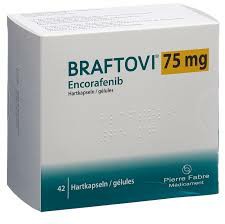
In a study involving 665 previously treated colorectal cancer patients with the BRAF V600E mutation that had spread to other parts of the body, canafenib plus cetuximab improved response rates and prolonged patients' survival compared with treatment with cetuximab and other cancer drugs. Approximately 20% of patients who received canafenib plus cetuximab responded to the treatment, compared with approximately 2% of patients who did not receive canafenib. Patients taking canafenib and cetuximab lived on average 9.3 months, compared with 5.9 months for those taking the other drugs.
In summary, canafenib has shown good therapeutic effect in the treatment of patients with metastatic colorectal cancer harboring BRAF V600E mutation, and can delay disease progression, improve disease control rate and prolong survival time. However, issues such as patient selection, combined medication, and adverse reactions need to be paid attention to during use. It is recommended to carry out standardized treatment under the guidance of a doctor to ensure the best therapeutic effect and safety.
[ 免责声明 ] 本页面内容来自公开渠道(如FDA官网、Drugs官网、原研药厂官网等),仅供持有医疗专业资质的人员用于医学药学研究参考,不构成任何治疗建议或药品推荐。所涉药品可能未在中国大陆获批上市,不适用于中国境内销售和使用。如需治疗,请咨询正规医疗机构。本站不提供药品销售或代购服务。


