
.jpeg)
Contraindications and precautions you must know before taking Mitotane
Mitotane (Mitotane) is a key drug in the treatment of adrenocortical cancer. Although it has significant efficacy, both patients and doctors must have a thorough understanding of its contraindications and precautions before taking it. This is because Mitotane has special pharmacological effects and possible side effects. The following is a detailed explanation of the contraindications and precautions for taking mitotane:
We want to be clear that mitotane needs to be used with extreme caution in patients with impaired hepatic function. Since mitotane (mitotane) is mainly metabolized and excreted through the liver, hepatic insufficiency may lead to obstruction of drug metabolism, thereby causing drug accumulation in the body and increasing the risk of hepatotoxic reactions. Therefore, the use of mitotane is strictly contraindicated in patients with severe hepatic insufficiency.
Patients with a history of severe liver damage (such as hepatitis, cirrhosis, etc.) should also consider carefully before deciding whether to use mitotane. The livers of these patients may have already suffered ongoing damage, and the hepatotoxicity of mitotane may further aggravate this damage, leading to further deterioration of liver function and even other serious complications.
Patients who are allergic to mitotane or any of its components should avoid taking this medication. Anaphylaxis may manifest as skin itching, hives, difficulty breathing, and in severe cases, anaphylactic shock.
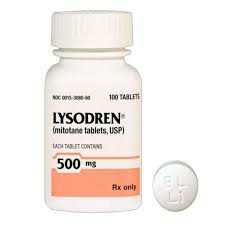
Mitotane is also contraindicated in pregnant and breastfeeding women. This is because mitotane has potential teratogenic and embryotoxic risks to the fetus. Also, because mitotane may be excreted in breast milk, it may also have adverse effects on the baby.
In children and adolescents 18 years of age, because the safety and effectiveness of mitotane have not been fully established, its use is generally not recommended for patients in this age group. This is because there may be differences in physiology and drug metabolism between young people and adults.
Mitotane may also affect thyroid function, causing hypothyroidism or abnormal thyroid hormone levels. Therefore, patients with hypothyroidism require special caution when using mitotane and may require additional thyroid function monitoring and treatment adjustments.
For patients with renal insufficiency, since mitotane is mainly excreted through the kidneys, there may be a problem of drug accumulation in the body, increasing the risk of nephrotoxicity. In this case, medication dosage may need to be adjusted or other treatment options may need to be considered.
In addition to the above-mentioned clear contraindications, it is also important to note that patients with a history of heart disease (such as severe arrhythmia or heart failure, etc.), a history of autoimmune diseases (such as systemic lupus erythematosus, etc.), a history of central nervous system diseases (such as epilepsy or neuropsychiatric disorders, etc.), and a history of long-term alcohol or drug abuse also need to be particularly careful when taking mitotane.
Before starting to take mitotane (mitotane), patients should undergo a comprehensive health assessment and related examinations, including but not limited to liver function tests, renal function tests, thyroid function tests and electrocardiogram tests. These tests help evaluate the patient's overall health and suitability for medications.
During treatment, patients need to be regularly monitored and managed by a physician. This includes regular review and testing of various physiological indicators, timely identification and treatment of possible side effects, and personalized adjustment of treatment plans based on the patient's specific response and drug metabolism.
In general, although mitotane has shown significant efficacy in the treatment of adrenocortical cancer, a series of contraindications and precautions need to be strictly observed before and during use to ensure the safety and effectiveness of the treatment. Patients and family members should closely cooperate with the doctor's guidance and report any abnormal reactions in a timely manner so that the treatment plan can be adjusted in a timely manner and improve the success rate of treatment and the patient's quality of life.
[ 免责声明 ] 本页面内容来自公开渠道(如FDA官网、Drugs官网、原研药厂官网等),仅供持有医疗专业资质的人员用于医学药学研究参考,不构成任何治疗建议或药品推荐。所涉药品可能未在中国大陆获批上市,不适用于中国境内销售和使用。如需治疗,请咨询正规医疗机构。本站不提供药品销售或代购服务。


