
.jpeg)
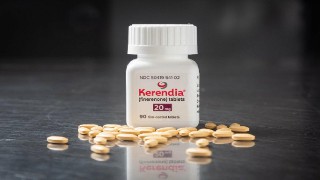
Overview of the package insert for fenelidone
1. Common name: Finerenone,Finerenone
Product name:Kerendia, Keshenda
2. Indications:
Finerenone (Finerenone reduces the risk of persistent decline in eGFR, end-stage renal disease, cardiovascular death, nonfatal myocardial infarction, and hospitalization for heart failure in adults with chronic kidney disease (CKD) associated with type 2 diabetes (T2D).
3. Usage and dosage:
1. Before medication: Patients need to measure serum potassium levels and estimated glomerular filtration rate (eGFR) before starting. If serum potassium is >5.0mEq/L (milliequivalents/L), do not start treatment.
2. Recommended dosage: The recommended starting dose of fenelidone is based on eGFR. When eGFR ≥ 60 mL/min/1.73 m2, the dosage is 20 mg once a day; when eGFR ≥ 20 to <60 mL/min/1.73 m2, the dosage is 10 mg once a day; when eGFR < 20 mL/min/1.73 m2, the use of fenelidone is not recommended.
3. Medication management: Fenelidone is provided in the form of tablets. For patients who are unable to swallow the entire tablet, it can be crushed and mixed with water or soft food such as applesauce immediately before use, and then administered orally. Instruct patients to take the missed dose as soon as possible after discovering it, but only on the same day. If a refill cannot be taken immediately, the patient should skip the dose and continue with the next dose as prescribed.
4. Dose adjustment: The target daily dose of fenelidone is 20 mg. Measure serum potassium and adjust dose 4 weeks after initiating treatment; if serum potassium levels are >4.8-5.0 mEq/L, based on clinical judgment and serum potassium levels, consideration may be given to starting treatment within the first 4 weeks with additional serum potassium monitoring. Monitor serum potassium for 4 weeks after dose adjustment and throughout treatment and adjust dose as needed. If eGFR decreases by more than 30% compared to the previous measurement, maintain the 10 mg dose.
4. Adverse reactions:
In clinical studies of fenelidone, the most common adverse reactions include hyperkalemia (the presence of high concentrations of potassium in the blood). Symptoms associated with this clinical finding include nausea, weakness, chest pain, and movement disorders. Other common adverse reactions include hyponatremia (low levels of blood sodium) and hypotension, which may manifest as headache, confusion, weakness, and sensory imbalance.
5. Supply and storage:
Finelidone is available as film-coated tablets in two strengths, 10 mg and 20 mg, and can be stored at 20°C to 25°C (68°F to 77°F); deviations of 15°C to 30°C (59°F to 86°F) are permitted.
6. Taboo:
Fenelidone is contraindicated in the following patients:
1. Patients receiving combination therapy with potentCYP3A4 inhibitors;
2. Patients with adrenal insufficiency.
7. Mechanism of action:
Finelidone is a nonsteroidal selective mineralocorticoid receptor (MR) antagonist, which is activated by aldosterone and cortisol and regulates gene transcription. Finelidone blocks MR-mediated sodium reabsorption and MR hyperactivation in epithelial (e.g., kidney) and non-epithelial (e.g., heart and blood vessels) tissues. Magnetic resonance overactivation is thought to lead to fibrosis and inflammation. Fenelidone is highly potent and selective for MR and has no relevant affinity for androgen, progesterone, estrogen, and glucocorticoid receptors.
[ 免责声明 ] 本页面内容来自公开渠道(如FDA官网、Drugs官网、原研药厂官网等),仅供持有医疗专业资质的人员用于医学药学研究参考,不构成任何治疗建议或药品推荐。所涉药品可能未在中国大陆获批上市,不适用于中国境内销售和使用。如需治疗,请咨询正规医疗机构。本站不提供药品销售或代购服务。


