
.jpeg)
Treatment with fenelidone after hospitalization for heart failure slows progression of chronic kidney disease
Patients with chronic kidney disease (CKD) and type 2 diabetes (T2D) who received finerenone had slower progression of CKD (as measured by estimated glomerular filtration rate [eGFR]) after hospitalization for heart failure, according to a post hoc subgroup analysis of the FIDELITY study, according to a poster presented at the National Kidney Foundation (NKF) 2024 Clinical Meeting. CKD is a common complication of T2D, affecting approximately 40% of T2D patients. Cardiovascular complications and chronic kidney disease are closely related, so the progression of one disease will lead to the worsening of the other. The researchers believe these findings encourage continued use of the drug after hospital discharge.
The FIDELITY study is a prespecified pooled analysis of complementary Phase 2 clinical trials of FIDELIO-DKD and FIGARO-DKD in which fenelidone treatment reduced the risk of cardiovascular and renal outcomes better than placebo in patients with CKD and T2D. Post hoc analyzes assessed the benefit of continuing treatment after hospitalization for heart failure in this population.
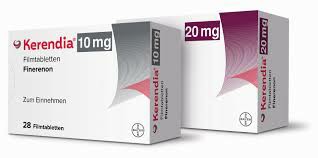
Patients receiving optimized renin-angiotensin system blockade were randomly assigned to fenglitazone or placebo. This patient population included patients hospitalized for heart failure >4 months after randomization, and a landmark analysis model was used with time to adjudication of heart failure hospitalization set at zero. Eligible patients were ≥18 years of age, diagnosed with T2D, receiving maximum tolerated doses of angiotensin-converting enzyme (ACE) inhibitors or angiotensin receptor blockers (ARBs) for ≥4 weeks, and demonstrated moderate or severe increased proteinuria.
Intention-to-treat and sensitivity-to-treat analyzes were conducted using time exclusion windows of 90, 120, and 150 days for heart failure hospitalization Changes in eGFR slope were determined by a mixed-effects model. The eGFR slope is reported as the least squares mean change in eGFR from month 4 to hospitalization for heart failure and from hospitalization to study end. At baseline, patient characteristics were generally balanced among patients receiving fenelidone (n=239) and placebo (n=311). In the fenelidone group, 62.8% were male, the mean age was 66.7 years, and the mean duration of diabetes was 18.0 years. In the placebo group, 74.9% were male, the average age was 67.8 years, and the average duration of diabetes was 17.6 years.
In preliminary analysis, patients treated with fenelidone showed slower recovery before hospitalization for heart failure compared with placeboCKD progression (-2.8 ml/min/1.73 m2/year [ml/min/1.73m2/year] and -5.4ml/min/1.73m2/year, respectively). Reported eGFR values u200bu200bdeclined more slowly in the fenelidone cohort after hospitalization compared with placebo (treatment difference 1.0 ml/min/1.73 m2/year, P = 0.34). Results for other time exclusion windows and sensitivity analyzes were similar.
The researchers noted that the benefits of the randomization process were nullified by using post-baseline data to define subgroups. Therefore, there may be unmeasured confounders in randomization that may bias the efficacy outcome data. However, the analysis was strengthened by using data from an international, multicenter, diverse patient cohort, which in turn increases the generalizability of the findings. In addition, hospitalizations for heart failure events were independently adjudicated to confirm the accuracy and consistency of these events.
[ 免责声明 ] 本页面内容来自公开渠道(如FDA官网、Drugs官网、原研药厂官网等),仅供持有医疗专业资质的人员用于医学药学研究参考,不构成任何治疗建议或药品推荐。所涉药品可能未在中国大陆获批上市,不适用于中国境内销售和使用。如需治疗,请咨询正规医疗机构。本站不提供药品销售或代购服务。


