
.jpeg)
Can larotinib/larlotinib replace bevacizumab?
Larotrectinib and bevacizumab are two different drugs used in cancer treatment, with different mechanisms of action and indications. Based on the current clinical data and drug characteristics, larotrectinib and bevacizumab are two different drugs and cannot be substituted for each other in treatment. If a suitable treatment plan needs to be selected, the patient's condition, pathological type, genetic test results, etc. should be considered comprehensively, and the doctor should make a professional assessment and decision.
Bevacizumab is an anti-angiogenic drug that prevents the formation of new blood vessels in tumors by inhibiting the activity of vascular endothelial growth factors, thereby inhibiting the growth and spread of tumors. This drug has shown good efficacy in the treatment of a variety of metastatic cancers, such as metastatic colorectal cancer and advanced non-small cell lung cancer. However, the use of bevacizumab may also cause some side effects, such as gastrointestinal discomfort, cardiovascular events, renal function damage, etc.
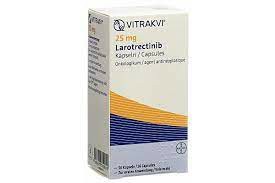
In contrast, larotrectinib is a targeted therapy drug that mainly targets tumors positive for neurotrophic tyrosine receptor kinase (NTRK) gene fusion. This drug exerts a therapeutic effect by inhibiting the growth of tumor cells carrying NTRK gene fusions, and has significant therapeutic effects on a variety of solid tumors with NTRK gene fusions. However, larotrectinib does not directly act on angiogenesis, so its mechanism of action is essentially different from that of bevacizumab.
In a clinical study comparing the two, Infigratinib had greater efficacy than larotrectinib in adult patients with glioma and tyrosine kinase alterations after initial treatment failure. Infigratinib increased overall survival compared with larotrectinib in adult patients with glioma and tyrosine kinase alterations. Infigratinib has more side effects than larotrectinib in adult patients with glioma and tyrosine kinase alterations after initial treatment failure. Bevacizumab combined with infigratinib or larotrectinib can improve the overall survival rate of glioma patients.
When considering whether larotrectinib can be used as an alternative to bevacizumab, it needs to be clear that although both drugs are used to treat cancer, their indications and mechanisms of action are different. Therefore, larotrectinib is not a direct replacement for bevacizumab in most cases. Specifically, if a patient's tumor is sensitive to bevacizumab and no intolerable side effects occur, continuing bevacizumab may be a better option. And if the patient's tumor has NTRK gene fusion and is sensitive to larotinib, larotinib may be a more appropriate treatment option.
[ 免责声明 ] 本页面内容来自公开渠道(如FDA官网、Drugs官网、原研药厂官网等),仅供持有医疗专业资质的人员用于医学药学研究参考,不构成任何治疗建议或药品推荐。所涉药品可能未在中国大陆获批上市,不适用于中国境内销售和使用。如需治疗,请咨询正规医疗机构。本站不提供药品销售或代购服务。


