
.jpeg)
How effective is Enleri Ixazomib Citrate Capsules?
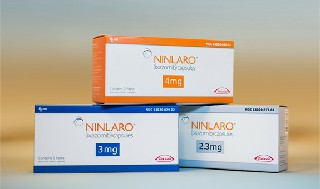
Enleri Ixazomib Citrate Capsules (hereinafter referred to as"Ixazomib"), as an anti-tumor drug, have demonstrated significant clinical effects in the treatment of multiple myeloma (MM).
Ixazomib is a reversible proteasome inhibitor. Its main mechanism of action is to preferentially bind to the β5 subunit of the proteasome and inhibit its chymotrypsin-like activity, thus blocking the degradation process of proteins in tumor cells, affecting cell proliferation and apoptosis regulation, and achieving the purpose of inhibiting tumor growth. In addition, ixazomib can also induce apoptosis in multiple myeloma cell lines and has a cytotoxic effect on patients who have relapsed after treatment with multiple drugs such as bortezomib, lenalidomide and dexamethasone, and has a synergistic cytotoxic effect when combined with lenalidomide.
In clinical practice, ixazomib is often used in combination with lenalidomide and dexamethasone to form the IRd regimen for the treatment of adult patients with multiple myeloma who have received at least one prior therapy. This combination treatment regimen has achieved excellent efficacy in multiple clinical trials. For example, in a global multi-center study, the IRd regimen significantly prolonged patients' progression-free survival (PFS), and there was also a trend of improvement in overall survival (OS).
Multiple clinical trials have shown that the combination of ixazomib can significantly extend the progression-free survival (PFS) of patients compared with lenalidomide and dexamethasone alone. This indicates that ixazomib plays an important role in maintaining disease stability and delaying disease progression.
Although improvements in overall survival (OS) in some studies did not reach statistical significance, the overall trend suggests that ixazomib helps prolong patients' OS.
In some clinical trials, patients in the ixazomib combination treatment group achieved higher response rates, including partial response (PR) and very good partial response (VGPR), a few patients even achieved complete remission (CR).
The safety profile of ixazomib is generally good, but patients still need to pay attention to possible adverse reactions during use. Common adverse reactions include diarrhea, thrombocytopenia, nausea, fatigue, etc. Most adverse reactions are mild to moderate and can be alleviated by dose adjustment or symptomatic treatment. It should be noted that when ixazomib is used in combination with lenalidomide and dexamethasone, it may increase the risk of certain adverse reactions, such as deep vein thrombosis (DVT) and pulmonary embolism (PE). Therefore, the patient's physical condition needs to be closely monitored and corresponding preventive measures must be taken during use.
The use of ixazomib has brought significant benefits to patients. First, by inhibiting tumor growth and inducing apoptosis, ixazomib helps control the progression of multiple myeloma and prolong patient survival. Secondly, the high response rate of the ixazomib combination treatment regimen means that more patients can obtain disease remission and improve their quality of life. In addition, the oral administration method of ixazomib is simple and easy to implement, which improves patients' treatment compliance and convenience.
Although the safety profile of ixazomib is generally good, patients should regularly monitor blood cells, liver and kidney function and other indicators during use to evaluate the impact of the drug on the body. Adverse reactions that occur should be dealt with in a timely manner and the treatment plan should be adjusted to reduce the occurrence of adverse reactions. For special groups such as elderly patients and patients with impaired liver and kidney function, the dosage or treatment plan should be adjusted according to the specific situation.
[ 免责声明 ] 本页面内容来自公开渠道(如FDA官网、Drugs官网、原研药厂官网等),仅供持有医疗专业资质的人员用于医学药学研究参考,不构成任何治疗建议或药品推荐。所涉药品可能未在中国大陆获批上市,不适用于中国境内销售和使用。如需治疗,请咨询正规医疗机构。本站不提供药品销售或代购服务。


