
.jpeg)
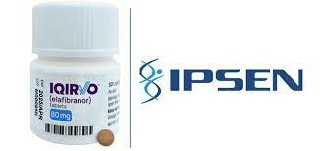
Instructions for Elafibranor-Iqirvo
1. Name:Elafibranor, Iqirvo, Elafibranor (transliteration)
2. Indications:
Elafibranor (Elafibranor)-Iqirvo is indicated for the treatment of primary cholangitis (PBC) in adults with poor response to UDCA in combination with ursodeoxycholic acid (UDCA), or for the treatment of patients who cannot tolerate UDCA. This indication is approved under accelerated approval for alkaline phosphatase (ALP) reduction. Improved survival or prevention of hepatic decompensation events have not been demonstrated.
3. Usage and dosage:
1. Before use: Before starting treatment with Iqirvo, evaluate muscle pain or myopathy and verify that women of reproductive potential are not pregnant.
2. Recommended dose: The recommended dose of Iqirvo is 80 mg once daily, taken orally with or without food.
3. Dose adjustment of combined medication: Use Iqirvo at least 4 hours before or 4 hours after taking bile acid sequestrants, or as long as possible.
4. Adverse reactions:
In clinical studies of Iqirvo, common adverse reactions include weight gain, diarrhea, abdominal pain, nausea, vomiting, joint pain, constipation, muscle injury, fractures, gastroesophageal reflux disease, dry mouth, weight loss, and rash; muscle injury may include rhabdomyolysis, increased creatine phosphokinase (CPK) with or without myalgia, and myopathy.
5. Supply and storage:
Iqirvo is supplied as tablets and stored at room temperature 15°C to 30°C (59°F to 86°F) primarily in the original packaging (bottle and carton) to protect it from moisture and light.
6. Taboo:
1. Iqirvo is not recommended for patients who suffer from or develop decompensated cirrhosis (such as ascites, variceal bleeding, hepatic encephalopathy);
2. Patients with complete biliary obstruction should avoid using Iqirvo.Iqirvo.
7. Mechanism of action:
Elafibranor and its primary active metabolite GFT1007 are peroxisome proliferator-activated receptor (PPAR) agonists, both of which activate PPAR-α, PPAR-γ, and PPAR-δ in vitro. However, the mechanism by which Elafibranor exerts its therapeutic effect on PBC patients is unclear. Pharmacological activities potentially relevant to therapeutic efficacy include inhibition of bile acid synthesis through activation of PPAR-α and PPAR-δ. It has been reported that the signaling pathway of PPARδ includes fibroblast growth factor 21 (FGF21)-dependent downregulation of CYP7A1, a key enzyme for the synthesis of bile acids from cholesterol.
In vitroPPAR functional analysis showed that both Elafibranor and GFT1007 produced activation of PPAR-α (EC50 was 46nM and 14nM, respectively, and Emax was 56% and 61%, respectively, relative to the reference agonist). Elafibranor and GFT1007 are approximately 3-8 times more potent in activating PPAR-α than PPAR-γ and PPAR-δ, respectively. Although in vitro pharmacology studies detected activation of PPAR-γ by Elafibranor and its metabolite GFT1007, toxicology studies conducted in animal studies showed no side effects associated with PPAR-γ activation.
[ 免责声明 ] 本页面内容来自公开渠道(如FDA官网、Drugs官网、原研药厂官网等),仅供持有医疗专业资质的人员用于医学药学研究参考,不构成任何治疗建议或药品推荐。所涉药品可能未在中国大陆获批上市,不适用于中国境内销售和使用。如需治疗,请咨询正规医疗机构。本站不提供药品销售或代购服务。


