
.jpeg)
What are the precautions for Elafibranor-Iqirvo?
In the clinical study of Elafibranor-Iqirvoin the treatment of primary cholangitis (PBC), warnings and precautions such as myalgia, myopathy and rhabdomyolysis, fractures, drug-induced liver injury, allergic reactions, adverse effects on fetal and neonatal development, and biliary obstruction occurred. Discontinue and resume at reduced dose upon recovery, or permanently discontinue based on severity.
1. Myalgia, Myopathy, and Rhabdomyolysis: Rhabdomyolysis leading to acute kidney injury developed in a treated patient who had cirrhosis at baseline and was taking a stable dose of a HMG-CoA reductase inhibitor (statin). Patients treated with Iqirvo alone or concurrently with a stable dose of an HMG-CoA reductase inhibitor developed myalgia or myopathy with or without an increase in creatine phosphokinase (CPK).
Assess for myalgia and myopathy before starting Iqirvo. Consider periodic evaluation (clinical examination, CPK measurement) during treatment with Iqirvo, especially in those patients who develop signs and symptoms of new onset or worsening of muscle pain or myopathy. Interrupt treatment with Iqirvo if new onset or worsening of muscle pain, myopathy, or rhabdomyolysis occurs.
2. Fracture: Considerthe risk of fracture in patients treated with Iqirvo and monitor bone health according to current standards of care.
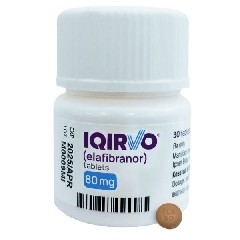
3. Adverse effects on fetal and neonatal development: Based on the results of animal reproduction studies, use of Iqirvo during pregnancy may cause harm to the fetus. Treatment of pregnant rats with Iqirvo at recommended doses for maternal plasma drug exposure ≤human exposure resulted in stillbirth, reduced survival, decreased pup body weight, and/or blue/black discoloration of the body tail.
For women of childbearing potential, confirm that the patient is not pregnant before starting treatment; recommend that women of childbearing potential use effective non-hormonal contraceptives or add a barrier method when using hormonal contraceptives during treatment and within 3 weeks after the last dose of medication, and that lactating women should not breastfeed for 3 weeks.
4. Drug-induced liver injury: Its clinical manifestation is drug-induced autoimmune hepatitis (DI-ALH), and the median time to increase in liver examination is 85 days; In clinical studies, patients There were increased aminotransferases (alanine aminotransferase[ALT] and aspartate aminotransferase [AST] ≥5 × ULN), and total bilirubin (TB) increased (>3 × ULN).
Obtain baseline clinical and laboratory assessments at the beginning of Iqirvo treatment and monitor according to routine patient management. Interrupt Iqirvo therapy if liver tests (ALT, AST, TB, and/or alkaline phosphatase [ALP]) worsen or if the patient develops signs and symptoms consistent with clinical hepatitis (e.g., jaundice, right upper quadrant pain, eosinophilia). If liver function tests worsen after restarting Iqirvo, consider permanently discontinuing the drug.
5. Allergic reactions: In clinical trials,anaphylactic reactions occurred at 1.5 times the recommended dose of Iqirvo; rash or unknown allergic reactions occurred 2 to 30 days after starting treatment with Iqirvo; the allergic reactions were resolved after stopping Iqirvo and treating with steroids and/or antihistamines. If a severe allergic reaction occurs, permanently discontinue Iqirvo. If a mild or moderate allergic reaction occurs, interrupt Iqirvo and treat immediately. Monitor patients until symptoms and signs resolve. If an allergic reaction recurs after Iqirvo rechallenge, permanently discontinue Iqirvo.
6. Biliary tract obstruction: Patients with complete biliary obstruction should avoid using Iqirvo.Iqirvo. If biliary obstruction is suspected, interrupt Iqirvo and treat as clinically indicated.
[ 免责声明 ] 本页面内容来自公开渠道(如FDA官网、Drugs官网、原研药厂官网等),仅供持有医疗专业资质的人员用于医学药学研究参考,不构成任何治疗建议或药品推荐。所涉药品可能未在中国大陆获批上市,不适用于中国境内销售和使用。如需治疗,请咨询正规医疗机构。本站不提供药品销售或代购服务。


