
.jpeg)
What are the precautions for donanemab (donanemab-azbt)-Kisunla?
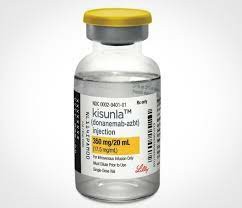
In the clinical study of donanemab (donanemab-azbt)-Kisunla in the treatment of Alzheimer's disease (AD), warnings and precautions such as amyloid-related imaging abnormalities, allergic reactions, and infusion-related reactions have emerged. Discontinue and resume at reduced dose upon recovery, or permanently discontinue based on severity. Discontinue and resume at reduced dose upon recovery, or permanently discontinue based on severity.
1. Amyloid-related imaging abnormalities:
Monoclonal antibodies directed against aggregated forms of amyloid beta, including Kisunla, can cause amyloid-related imaging abnormalities (ARIA), manifested as ARIA with edema (ARIA-E), cerebral edema or sulcal fluid seen on MRI, and ARIA with hemosiderin deposition (ARIA-H), including microbleeds and surface siderosis. ARIA can occur spontaneously in patients with Alzheimer's disease, especially in patients with MRI findings suggestive of cerebral amyloid angiopathy, such as microbleeds or superficial siderosis before treatment. ARIA-H associated with monoclonal antibodies directed against aggregated forms of amyloid beta is often associated with the appearance of ARIA-E. ARIA-H and ARIA-E can appear together for any reason.
ARIA usually develops early in treatment and is usually asymptomatic, although serious and life-threatening events, including seizures and status epilepticus, are rare. When present, reported symptoms associated with ARIA may include, but are not limited to, headache, confusion, visual changes, dizziness, nausea, and difficulty with gait. Focal neurological deficits may also occur. Symptoms associated with ARIA usually go away over time. In addition to ARIA, patients treated with Kisunla also experienced cerebral hemorrhage with a diameter of >1cm.
When deciding to initiate treatment with Kisunla, consider the benefits of Kisunla in treating Alzheimer's disease and the potential risk of ARIA-related serious adverse events.
2. Anaphylaxis: Patients receiving Kisunla have experienced allergic reactions, including anaphylaxis and angioedema. Upon first observation of any signs or symptoms consistent with an allergic reaction, discontinue the infusion immediately and initiate appropriate treatment. Kisunla is contraindicated in patients with a history of severe allergy to donanemab-azbt or any excipients of Kisunla.
3. Infusion-related reactions: Infusion reactions usually occur during the infusion or within 30 minutes after the infusion. Infusion-related reactions are mostly mild or moderate in severity. Infusion-related reactions resulted in discontinuation in treated patients. Signs and symptoms of infusion-related reactions include chills, erythema, nausea/vomiting, dyspnea/dyspnea, sweating, increased blood pressure, headache, chest pain, and hypotension.
If an infusion-related reaction occurs, the infusion rate may be reduced or the infusion may be interrupted and appropriate treatment initiated as clinically indicated. Pretreatment with an antihistamine, acetaminophen, or corticosteroids before subsequent doses may be considered.
[ 免责声明 ] 本页面内容来自公开渠道(如FDA官网、Drugs官网、原研药厂官网等),仅供持有医疗专业资质的人员用于医学药学研究参考,不构成任何治疗建议或药品推荐。所涉药品可能未在中国大陆获批上市,不适用于中国境内销售和使用。如需治疗,请咨询正规医疗机构。本站不提供药品销售或代购服务。


