
.jpeg)
Mechanism of action of adagrasib?
As an innovative adult prescription drug, adagrasib's mechanism of action mainly focuses on the inhibition of KRAS G12C mutation. The KRAS G12C mutation is common in non-small cell lung cancer (NSCLC) and some other cancers such as colon or rectal cancer (CRC), and it promotes the growth and spread of cancer cells. Adagrasiib is an irreversible inhibitor of KRAS G12C with a unique and highly effective mode of action.
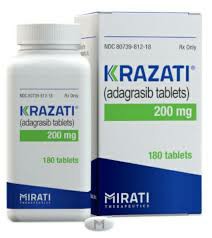
It covalently binds to the mutated cysteine in KRAS G12C. This strong binding force firmly locks the mutated KRAS protein in an inactive state. In this way, the downstream signaling originally activated by the KRAS G12C mutation is effectively blocked. It is worth mentioning that adagrasib does not affect the normal, wild-type KRAS protein when it works, which shows its high targeting and selectivity.
Further, by blocking key signaling pathways, adagrasib can significantly inhibit the growth and viability of tumor cells carrying KRAS G12C mutation. In experiments, the drug even caused significant tumor regression in KRAS G12C mutant tumor xenograft models. More importantly, while it exerts a therapeutic effect, its off-target activity is controlled to a minimum, which means that it has minimal impact on normal cells, thus reducing potential side effects.
In general, adagrasib brings new hope to KRAS G12C mutated cancer patients with its mechanism of action and therapeutic effect. Not only can it effectively control the proliferation of cancer cells, it has also shown good safety and tolerability in clinical trials, opening up a new path for future cancer treatment.
[ 免责声明 ] 本页面内容来自公开渠道(如FDA官网、Drugs官网、原研药厂官网等),仅供持有医疗专业资质的人员用于医学药学研究参考,不构成任何治疗建议或药品推荐。所涉药品可能未在中国大陆获批上市,不适用于中国境内销售和使用。如需治疗,请咨询正规医疗机构。本站不提供药品销售或代购服务。


