
.jpeg)
Capmatinib’s new breakthrough in the treatment of non-small cell lung cancer
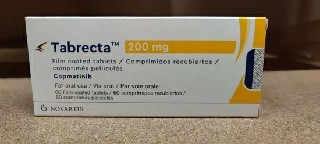
Capmatinib, as a highly potent and selective MET inhibitor (METi), has been approved in many countries around the world at a dose of 400 mg twice daily for the treatment of patients with metastatic non-small cell lung cancer (NSCLC) with MET exon 14 skipping (METex14) properties. Recently, research on capmatinib has made significant progress, demonstrating its excellent performance in single agent and combination therapy.
In a clinical study calledGEOMETRY mono-1, capmatinib showed significant efficacy in patients with advanced NSCLC and METex14, and even showed good therapeutic effects in patients with brain metastases. Furthermore, the clinical activity of capmatinib is even more impressive when used in combination with gefitinib. Currently, a phase 1b/2 clinical trial is ongoing to further evaluate the efficacy and safety of the combination of capmatinib and nazartinib in the treatment of patients with advanced EGFR-mutated NSCLC.
In a phase 1b trial, researchers used an increasing dose of capmatinib (200-400 mg, twice daily) combined with nazartinib (50-150 mg, once daily) treatment for patients whose disease progressed after treatment with first/second generation EGFR tyrosine kinase inhibitors (EGFR-TKIs). After determining the maximum tolerated dose (MTD) and recommended phase 2 dose (RP2D), the study entered Phase 2.
In the Phase 2 study, patients were subdivided into four different treatment groups based on their genetic mutation status and previous treatment history. This grouping allows for a more precise assessment of a drug's effectiveness in different patient groups. The overall response rate (ORR) of each group has become an important indicator to evaluate the efficacy. At the same time, the study also focused on the safety of the drug and the tolerability of taking it with food.
The trial results show that RP2D is a combination of capmatinib 400 mg twice daily and nazartinib 100 mg once daily. In the second phase of the study (involving a total of 144 patients), the ORRs in the four different treatment groups reached 28.8%, 33.3%, 61.7% and 42.9% respectively. In addition, varying degrees of efficacy were also observed in subgroup analyzes of MET-positive and -negative patients, as well as T790M-positive and -negative patients.
It is worth noting that although some treatment-related adverse events were recorded during the treatment, such as peripheral edema, nausea, diarrhea, and maculopapular rash, most of these reactions were within a controllable range, and the overall safety profile was acceptable.
In summary, the latest clinical data show that capmatinib combined with nazartinib exhibits significant anti-tumor activity in patients with EGFR-TKI-resistant EGFR mutated non-small cell lung cancer, and has an acceptable overall safety profile. This discovery provides new treatment strategies for this type of patients and is expected to change the treatment landscape of non-small cell lung cancer in the future.
[ 免责声明 ] 本页面内容来自公开渠道(如FDA官网、Drugs官网、原研药厂官网等),仅供持有医疗专业资质的人员用于医学药学研究参考,不构成任何治疗建议或药品推荐。所涉药品可能未在中国大陆获批上市,不适用于中国境内销售和使用。如需治疗,请咨询正规医疗机构。本站不提供药品销售或代购服务。


