
.jpeg)
How effective is capmatinib in treating meningeal metastasis?
Capmatinib (Capmatinib) is a targeted therapy drug targeting MET mutations, which has shown good clinical effects especially in non-small cell lung cancer (NSCLC). Prior to its approval, crizotinib was widely recommended for the treatment of patients with advanced non-small cell lung cancer harboring MET exon 14 mutations (METex14). However, despite the efficacy of crizotinib in initial treatment, a subset of patients develop disease progression after treatment with this drug, particularly the development of isolated tumor lesions in the central nervous system (CNS).
In this case, capmatinib, as a new treatment option, has attracted the attention of researchers due to its activity onCNS. A case study reports the treatment experience of a patient with metastatic METex14 non-small cell lung cancer. The patient initially experienced a systemic response to crizotinib but later developed disease progression in the CNS. This phenomenon is not uncommon in clinical practice because many targeted drugs often have difficulty penetrating the blood-brain barrier when treating lung cancer and thus cannot effectively control metastasis in the central nervous system.
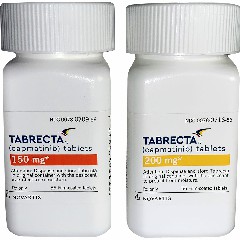
In order to solve this problem, the doctor decided to switch the patient to capmatinib treatment. Studies have shown that capmatinib not only inhibits tumor growth, but also exhibits significant CNS permeability, making it potentially useful in treating meningeal metastases and other central nervous system metastases. In this case, the leptomeningeal lesions of the patient were significantly improved after capmatinib treatment, demonstrating the effectiveness of capmatinib in controlling CNS lesions.
In addition, clinical trial results also continue to confirm the effectiveness and safety of capmatinib in patients with MET-mutant non-small cell lung cancer. In multiple clinical trials, capmatinib has shown higher objective response rates and longer progression-free survival. These data not only support its use in the treatment of non-small cell lung cancer, but also strengthen its recognition as a treatment for patients with CNS metastases.
[ 免责声明 ] 本页面内容来自公开渠道(如FDA官网、Drugs官网、原研药厂官网等),仅供持有医疗专业资质的人员用于医学药学研究参考,不构成任何治疗建议或药品推荐。所涉药品可能未在中国大陆获批上市,不适用于中国境内销售和使用。如需治疗,请咨询正规医疗机构。本站不提供药品销售或代购服务。


