
.jpeg)
How effective is ivonib in treating cholangiocarcinoma?
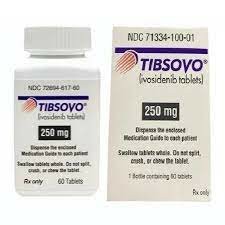
Ivosidenib is a targeted drug initially approved for the treatment of acute myeloid leukemia (AML) with mutations in the IDH1 gene. With the deepening of research, IDH1 gene mutations have been found not only in blood cancers, but also show high mutation rates in many solid tumors, including cholangiocarcinoma. Cholangiocarcinoma is a rare but aggressive tumor that is often diagnosed at an advanced stage with limited treatment options. For patients with cholangiocarcinoma with IDH1 mutations, the application of ivonib has attracted widespread attention.
1.The significance of IDH1mutation in cholangiocarcinoma
About10-20%of patients with cholangiocarcinoma carryIDH1 gene mutations. IDH1Mutation can lead to abnormal function of isocitrate dehydrogenase, which in turn triggers abnormal accumulation of the metabolite 2-hydroxyglutarate (2-HG). 2-HG is thought to play a pro-cancer role in the development and progression of cancer, particularly by affecting cell differentiation and DNA repair mechanisms. Ivonib inhibits the activity of mutated IDH1 enzyme, reduces the level of 2-HG and restores normal cell functions, thereby inhibiting the growth and spread of tumors.
2.Clinical trial data
The efficacy of ivonib in the treatment of IDH1mutated cholangiocarcinoma is mainly evaluated through clinical trials. The most representative study is the AG120-C-004 trial, a multicenter, single-arm phase II clinical trial designed to evaluate the safety and efficacy of ivonib in patients with advanced cholangiocarcinoma with IDH1 mutations.
In this trial, 73 patients with IDH1 mutated cholangiocarcinoma who had received at least one prior systemic therapy were included. All patients take 500 orally every daymg ivosidenib until disease progression or unacceptable toxicity. The primary endpoint of the study is objective response rate (ORR), and secondary endpoints include disease control rate (DCR), progression-free survival (PFS) and overall survival (OS).
3.Clinical efficacy
The trial results show that ivonib has a certain effect onIDH1mutated cholangiocarcinoma. ORR (including complete response and partial response) was 6%. Although this rate is relatively low, DCR reached 56%, which means that more than half of the patients had stable disease and no further tumor progression after receiving ivonib treatment. The median PFS was 2.7 months, and the median OS was 10.8 months, demonstrating the potential of ivonib in delaying disease progression and prolonging patient survival.
Although ORR is relatively low, the results of DCR and OS indicate , ivosidenib can control the progression of IDH1mutated cholangiocarcinoma to a certain extent, especially for patients who have failed other treatment options, providing a new treatment option.
4.Safety and Tolerability
The safety profile of ivonib in patients with cholangiocarcinoma was similar to that seen in AML patients. Common adverse reactions include fatigue, nausea, diarrhea, decreased appetite, and leukopenia. Although most side effects were mild to moderate, a small number of patients experienced serious adverse events, such as QT prolongation and differentiation syndrome (although the latter was less common in patients with cholangiocarcinoma). Overall, the safety profile of ivonib is considered manageable, and most patients can tolerate the treatment.
5.Clinical significance and future prospects
Ivonib treatment Research on IDH1 mutated cholangiocarcinoma provides a new direction for the development of precision medicine. Although ivonib's ORR is lower, its DCR and OS< span>'s data suggest that ivosidenib provides an important treatment option for patients with IDH1-mutant cholangiocarcinoma when existing treatments are limited, especially after failure of standard therapies.
Future studies may explore the combination of ivonib with other treatments, such as chemotherapy, immunotherapy or other targeted drugs, in order to improve efficacy. Additionally, further biomarker studies may help predict which patients will respond best to ivosidenib, thereby optimizing treatment strategies.
Avosidenib has shown certain effects in the treatment ofIDH1 mutated cholangiocarcinoma, and has significant potential in disease control and survival prolongation. Although its efficacy still needs to be further improved, as a targeted therapy for IDH1 mutations, ivonib provides a new hope for patients with cholangiocarcinoma, especially those who have experienced multiple treatment failures. With further research in the future, ivonib may become an important treatment option for patients with IDH1 mutated cholangiocarcinoma.
[ 免责声明 ] 本页面内容来自公开渠道(如FDA官网、Drugs官网、原研药厂官网等),仅供持有医疗专业资质的人员用于医学药学研究参考,不构成任何治疗建议或药品推荐。所涉药品可能未在中国大陆获批上市,不适用于中国境内销售和使用。如需治疗,请咨询正规医疗机构。本站不提供药品销售或代购服务。


