
.jpeg)
Adult AML patients with FLT3 mutations tolerate midostaurin combination chemotherapy well regardless of age
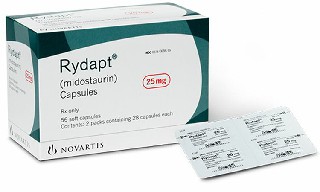
Midostaurin (Midostaurin) combined with intensive chemotherapy was well tolerated and had high response rates in healthy adult patients with FLT3-mutated newly diagnosed acute myeloid leukemia (FLT3mut ND-AML), regardless of age, according to published research.
The pivotal approval study showed that midostaurin (50 mg twice daily), along with standard chemotherapy, significantly reduced mortality in adult patients (<60 years of age) with [FLT3mut ND-AML]. However, information on patients aged ≥60 years is limited, as older patients make up the majority of AML cases and often respond poorly to standard treatments.
Investigators conducted an open-label, multicenterPhase 3b trial to further evaluate the safety and efficacy of midostaurin plus chemotherapy during induction, consolidation, and maintenance monotherapy in younger (≤60 years) and older (>60 years) patients with FLT3mut ND-AML (ClinicalTrials.gov identifier: NCT03379727). This open-label study extended midostaurin treatment from 14 to 21 days compared with approval (ClinicalTrials.gov identifier: NCT00651261), replaced the anthracycline (idarubicin or daunorubicin), and allowed for changes in the standard combination chemotherapy dose ("7+3" or "5+2" in more fragile patients).
During the clinical study period, 301 patients with FLT3mut ND-AML and one patient with Eastern Cooperative Oncology Group performance status ≤2 were enrolled. The median age of patients was 59 years (range: 19-85 years; >60 years, 47.2%). The majority of patients (82.7%) had FLT3-ITD mutations, while 17.6% had FLT3-TKD mutations.
Nearly all patients (98.0%) had at least 1 adverse event (AE), and 84.4% of patients had grade ≥3 AEs. Grade ≥3 serious adverse events occurred in 44.5%; these included febrile neutropenia (10.6%), sepsis (4.7%), pneumonia (4.0%), septic shock (3.7%), and respiratory failure (2.3%).
No differences were observed between age groups throughout the treatment periodDifference in AE frequency. However, older patients had a higher frequency of grade ≥3 AEs (90.1% vs. 79.2%), SAEs (54.2% vs. 37.7%), and AEs leading to treatment discontinuation (16.9% vs. 10.1%) compared with younger patients.
Overall,65.3% of patients achieved complete response (CR), and 15.3% achieved CR with incomplete hematological recovery. The resulting CR+CRi rate was 80.7% (95% CI, 75.74-84.98%), which was comparable between different age groups (≤60 years, 83.5%; >60 to ≤70 years, 82.5%; patients >70 years, 64.1%), independent of the anthracycline used. The CR+CRi rate in men (76.4%) was lower than that in women (84.4%).
In this study, midostaurin combined with intensive chemotherapy provided high response rates independent of patient age, induction regimen ("7+3" or "5+2"), or the type of anthracycline used during induction therapy (daunorubicin or idarubicin). These response rates support those observed in the approval study, in which 59% of patients treated with midostaurin achieved a CR. Given that the primary endpoint was safety, limitations of the study included the lack of a placebo arm and lack of patient follow-up and survival analysis after treatment discontinuation.
[ 免责声明 ] 本页面内容来自公开渠道(如FDA官网、Drugs官网、原研药厂官网等),仅供持有医疗专业资质的人员用于医学药学研究参考,不构成任何治疗建议或药品推荐。所涉药品可能未在中国大陆获批上市,不适用于中国境内销售和使用。如需治疗,请咨询正规医疗机构。本站不提供药品销售或代购服务。


