
.jpeg)
Evaluation of the clinical efficacy of platinib in patients with intermediate and advanced lung cancer with RET gene fusion
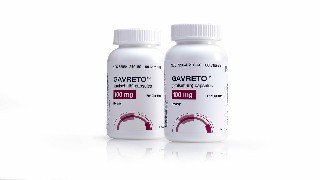
Platinib, as a targeted therapy for RET gene fusion-positive advanced non-small cell lung cancer (NSCLC), has achieved remarkable results in clinical efficacy in recent years.
RETGene fusion is a unique molecular subtype of NSCLC, although its incidence among lung cancer patients in my country is relatively low, accounting for about 1% pan>~2%, but considering the huge number of new lung cancer patients in my country every year, the absolute number of RET fusion-positive lung cancer patients cannot be ignored. Platinib, as a potent and highly selective RET inhibitor, blocks the proliferation and growth signals of tumor cells by specifically binding to RET protein and inhibiting its kinase activity.
In multiple clinical trials, platinib has demonstrated significant efficacy in RETfusion-positive NSCLC patients. For example, in the ARROW study, for the treatment-naïve population, the ORR of platinib treatment was as high as 79%, and the DCR even reached 93%. Among the patients who were eligible for chemotherapy after the revised protocol, the ORR and DCR were further improved to 88% and 96%, respectively. For those who have previously received platinum-based chemotherapy, platinib also showed strong efficacy, with an ORR of 62% and a DCR of 91%. These data fully demonstrate the high anti-tumor activity of platinib in RETfusion-positive NSCLC patients.
In addition to ORR and DCR, platinib also performed well in prolonging patients' PFS and DoR. In the treatment-naïve population, the median PFS reached 13 months, while in the platinum-based chemotherapy-experienced population, the median PFS was 16.5 months. In addition, for this group of patients, the median DoR also reached 22.3 months. These results demonstrate that platinib is not only effective in shrinking tumors but also in controlling disease progression over a longer period of time.
It is worth noting that RETfusion-positive NSCLC patients are often accompanied by brain metastases. In the ARROW study, approximately 38% of patients had baseline brain metastases. For these patients, platinib also showed good efficacy. Among patients with evaluable brain metastases, the central nervous system (CNS) ORR reached 56%, with 3 patients achieving complete remission. This result suggests that platinib also has potential advantages in controlling NSCLC brain metastasis.
In the Chinese population, Platinib also showed excellent efficacy. In the Chinese patient extension of the ARROW study, despite nearly half of the patients having received ≥3 lines of prior systemic therapy, ORR still reached 56%, and DCR was as high as 97%. These data are consistent with results from global populations and further confirm the effectiveness of platinib in Chinese RET fusion-positive NSCLC patients.
In terms of safety, platinib was generally well tolerated. Most adverse events are1~Level 2 and mostly predictable and manageable. Common adverse events include neutropenia, anemia, and hypertension. The proportion of patients with treatment interruption or dose reduction due to neutropenia was relatively low, and only a few patients discontinued treatment due to treatment-related adverse events. These results show that platinib maintains high anti-tumor activity while also possessing a good safety profile.
[ 免责声明 ] 本页面内容来自公开渠道(如FDA官网、Drugs官网、原研药厂官网等),仅供持有医疗专业资质的人员用于医学药学研究参考,不构成任何治疗建议或药品推荐。所涉药品可能未在中国大陆获批上市,不适用于中国境内销售和使用。如需治疗,请咨询正规医疗机构。本站不提供药品销售或代购服务。


