
.jpeg)
Study on the efficacy and survival of platinib in patients with lung cancer
Lung cancer is a malignant tumor with high morbidity and mortality rates worldwide, and its treatment has always been the focus of the medical community. In recent years, with the rapid development of molecular biology technology, the driver gene mutations of lung cancer have been gradually revealed, providing a new direction for precise treatment of lung cancer. Platinib, as a new type of RET inhibitor, has demonstrated significant clinical efficacy in patients with RET fusion-positive non-small cell lung cancer (NSCLC).
Platinib is an oral, once-daily, potent and highly selective RET inhibitor. It has shown significant efficacy in patients with RET fusion-positive NSCLC in clinical trials. The ARROW study is an important clinical study to evaluate the therapeutic efficacy, tolerability and safety of platinib. The results of this study show that in patients with RET fusion-positive non-small cell lung cancer after platinum treatment, the median response time after taking platinib (DOR ) is up to 38.8 months, and the survival period (OS) is up to 44.3 months.
In terms of safety, platinib was generally well tolerated. Common side effects include fatigue, constipation, musculoskeletal pain, hypertension, etc., but most are mild to moderate, and patients can reduce these side effects through appropriate adjustments and management. Although serious side effects exist, their incidence is relatively low, which also ensures the safety of patients' medication to a certain extent.
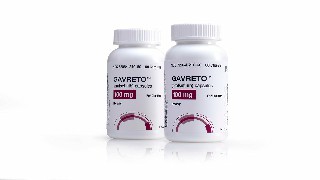
It is worth mentioning that platinib not only performs well in previously treated patients, but also shows good efficacy in newly treated patients. In the Chinese subgroup of the ARROW study, treatment-naive Chinese RET fusion-positive non-small cell lung cancer patients who received platinib treatment achieved an objective response rate of 80.0% and a disease control rate of 86.7%. This data further confirms the excellent efficacy of platinib in patients with RET fusion-positive NSCLC.
Platinib’s role in the treatment of lung cancer has gradually been recognized. Since its approval for marketing, platinib has been quickly included in many internationally renowned lung cancer diagnosis and treatment guidelines, such as the CSCO Non-Small Cell Lung Cancer Guidelines and the NCCN Non-Small Cell Lung Cancer Clinical Practice Guidelines. The recommendations of these guidelines not only provide clinicians with a strong basis for treatment, but also bring more treatment options to patients.
However, although platinib has shown significant efficacy in RETfusion-positive NSCLC patients, there is no definite time limit for how long patients can live after taking platinib. This mainly depends on many factors such as the patient's constitution, the absorption effect of the drug, and the progression of the disease. Therefore, it is recommended that patients undergo standardized treatment under the guidance of a doctor and undergo regular examinations and evaluations so that the treatment plan can be adjusted in a timely manner.
In addition, for patients with RET fusion-negative lung cancer or other types of lung cancer, the efficacy of platinib may not be significant. Therefore, when selecting treatment options, doctors should make individualized treatment decisions based on the patient's specific conditions.
In general, platinib, as a new type of RET inhibitor, has demonstrated significant clinical efficacy and good safety in patients with RET fusion-positive non-small cell lung cancer. Its emergence not only brings new treatment options to these patients, but also provides a new direction for precision treatment of lung cancer.
[ 免责声明 ] 本页面内容来自公开渠道(如FDA官网、Drugs官网、原研药厂官网等),仅供持有医疗专业资质的人员用于医学药学研究参考,不构成任何治疗建议或药品推荐。所涉药品可能未在中国大陆获批上市,不适用于中国境内销售和使用。如需治疗,请咨询正规医疗机构。本站不提供药品销售或代购服务。


