
.jpeg)
What is the effect of Roprestim/Romigrastim on increasing platelets?
The active substance of Romiplostim/Romiplostim (Romiplostim)romiplostim stimulates the production of platelets. In the body, a hormone called thrombopoietin normally stimulates the production of platelets in the bone marrow. Roplastin has been designed to attach to and stimulate the same target (receptor) as thrombopoietin. By mimicking the effects of thrombopoietin, roproprimostim stimulates the production of platelets, thereby increasing platelet counts and reducing the risk of bleeding.
Patients taking Ropremilast often experience an increase in platelet levels, and many studies report that platelet counts reach the normal range or near normal in most patients after treatment. Not only does the drug increase platelet counts, it also improves patients' quality of life, reduces the risk of bleeding and reduces the incidence of complications related to low platelets.
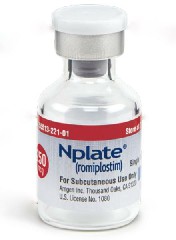
Two major studies in adults and a third study in children found that loproprim was effective in treating long-term immune thrombocytopenia (ITP). All studies compared roprostimwith a placebo, a dummy treatment. Patients received treatment for 24 weeks, with the primary measure of effectiveness being an increase in platelet counts above a threshold of 50 million platelets per milliliter of blood for at least 6 of the last 8 weeks of treatment. A platelet count below 30 million per milliliter puts patients at risk for bleeding, compared with a normal count of 150 million to 400 million per milliliter.
The first study involved63 patients whose disease remained uncontrolled despite having their spleens removed. Thirty-eight percent (16 of 42 patients) of patients who received roproprimostat had platelet counts above the threshold, compared with none of the 21 patients who received placebo. The second study involved 62 patients who had previously been treated with ITP (but had not had their spleens removed). Sixty-one percent (25 of 41) of patients treated with roproprimostat had platelet counts above the threshold, compared with 5% (1 of 21) of patients treated with placebo.
The study in children involved62 patients aged 1 to 18 years old who had previously received ITP (including some who had their spleens removed). Fifty-two percent of patients (22 of 42) who received ropruprim had platelet counts above the threshold, compared with 10% (2 of 20) of patients who received placebo. Long-term studies involving more than 1,000 patients, some of whom were treated for more than 5 years, confirmed that loprostim is effective in both patients who have had their spleens removed and those who have had their spleens removed.
Interestingly, the dose of loprostim required to achieve a platelet count greater than100x10^9/L was much smaller than the dose studied in clinical trials. Roprostim is a well-tolerated treatment. Most reported adverse reactions were mild to moderate and did not result in treatment discontinuation; some of the more commonly reported adverse reactions were mild to moderate post-injection headache, fatigue, and joint pain.
[ 免责声明 ] 本页面内容来自公开渠道(如FDA官网、Drugs官网、原研药厂官网等),仅供持有医疗专业资质的人员用于医学药学研究参考,不构成任何治疗建议或药品推荐。所涉药品可能未在中国大陆获批上市,不适用于中国境内销售和使用。如需治疗,请咨询正规医疗机构。本站不提供药品销售或代购服务。


