
.jpeg)
Analysis of the efficacy of platinib in adult patients with RET fusion-positive metastatic non-small cell lung cancer
Pralsetinib (trade name: Pujihua®), as a highly selective RET (Rearranged during Transfection) inhibitors have shown excellent clinical efficacy in the treatment of adult patients with RETfusion-positive metastatic non-small cell lung cancer (NSCLC) in recent years.
Platinib’s core advantage lies in its highly selective targeting of RET mutations in tumor cells. RETgene variation, specifically RETfusion, is a relatively rare driver gene mutation in non-small cell lung cancer, accounting for approximately 1%-2% of all NSCLC patients, but is more common in younger patients who do not smoke. RETfusion leads to sustained activation of RETkinase, which in turn drives the proliferation and spread of tumor cells. Platinib can accurately identify and inhibit these mutated RET kinases, thereby blocking the growth signals of tumor cells and achieving therapeutic purposes.
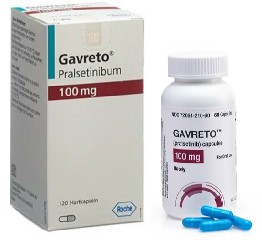
The ARROWstudy is a multicenter, open-label globalI/II phase clinical trial designed to evaluate platinib inRE Efficacy and safety in patients with Tfusion-positiveNSCLC and otherRET driven advanced solid tumors. The study showed that platinib achieved impressive results in treating patients with RET fusion-positive NSCLC. In treatment-naive patients without systemic treatment, the overall objective response rate (ORR) of platinib is as high as 79%, of which the complete response rate (CR) is 6%, and the partial response rate (PR) is 74%. Among previously treated patients who had received platinum-containing chemotherapy, the ORR also reached 62%, showing that platinib also has a significant effect on drug-resistant tumors.
Since the China National Food and Drug Administration (NMPA) approved the marketing of platinib on March 24, 2021, the application of this drug in Chinese patients has also achieved positive results. Platinib is not only used for the second-line treatment of patients with RET fusion-positive locally advanced or metastatic NSCLC who have previously received platinum-containing chemotherapy, but was also approved for first-line treatment in June 2023. Retrospective studies in domestic hospitals show that platinib also shows significant anti-tumor activity in the treatment of Chinese RETfusion-positive advanced NSCLC patients, with the median PFS reaching
Platinib demonstrated good tolerability and safety during treatment. Most adverse events were mild to moderate and patients generally tolerated and continued treatment. However, attention should also be paid to some possible serious adverse events, such as hypertension, lymphopenia, leukopenia, etc. These adverse events can often be effectively controlled and managed with close monitoring. In addition, the recommended dose of platinib is once a day, taken orally on an empty stomach. This administration method not only facilitates patient use, but also improves treatment compliance.
Compared with traditional chemotherapy, platinib, as a precision-targeted drug, can act more directly on specific targets of tumor cells, reducing damage to normal cells, thereby reducing side effects during treatment.
Platinib has shown durable efficacy in multiple clinical trials and can significantly extend patients' progression-free survival (PFS) and overall survival (OS).
Platinib's oral administration method and low incidence of side effects enable patients to maintain a high quality of life during treatment and reduce the physical and mental pain caused by treatment.
[ 免责声明 ] 本页面内容来自公开渠道(如FDA官网、Drugs官网、原研药厂官网等),仅供持有医疗专业资质的人员用于医学药学研究参考,不构成任何治疗建议或药品推荐。所涉药品可能未在中国大陆获批上市,不适用于中国境内销售和使用。如需治疗,请咨询正规医疗机构。本站不提供药品销售或代购服务。


