
.jpeg)
Platinib’s scope of application, functions and side effects
Platinib, as an oral, once-daily, potent and highly selective RET (Rearranged during Transfection) inhibitor, has been widely used in the treatment of various cancers around the world.
Platinib has a wide range of applications, mainly including the following cancer types:
1. Non-small cell lung cancer (NSCLC): Platinib has been approved by the China National Medical Products Administration for the treatment of adult patients with locally advanced or metastatic non-small cell lung cancer who have previously received platinum-based chemotherapy (RET) gene fusion. This approval provides new treatment options for these patients, especially those who have responded poorly to traditional treatments.
2.Medullary thyroid cancer (MTC): Platinib is also indicated for the treatment of adults and children 12 years and older with advanced or metastatic RETmutated medullary thyroid cancer who require systemic treatment. In addition, platinib is also an effective treatment for adults and pediatric patients 12 years and older with advanced or metastatic RET fusion-positive thyroid cancer who require systemic therapy and are refractory to radioactive iodine (if radioactive iodine is applicable).
3.Other solid tumors: In addition to the above two main indications, platinib has also shown therapeutic effects on a variety of other RET fusion-positive solid tumors in clinical trials, such as soft tissue tumors, head and neck tumors, etc. Although these indications have not yet been officially approved in all countries or regions, extensive research on platinib has laid the foundation for its use in more cancer types.
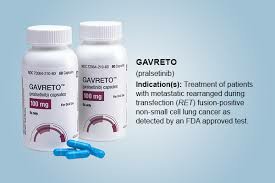
Platinib, as a RET inhibitor, its main mechanism of action is to selectively inhibit the activity of RET kinase, thereby effectively inhibiting the expression of RETproliferation of tumor cells. RET is a receptor tyrosine kinase that mutates in a variety of cancers, causing abnormal proliferation and spread of tumor cells. Platinib binds to RET kinase and blocks its signaling pathway, thereby inhibiting the growth and metastasis of tumor cells.
Specifically, platinib can inhibit the phosphorylation of RET and its downstream molecules, reduce the activation of downstream signaling pathways, thereby inhibiting the proliferation and survival of tumor cells. This highly selective mechanism of action allows platinib to inhibit tumor cells while having less impact on normal cells, reducing the side effects caused by traditional chemotherapy drugs.
Although platinib has shown good efficacy in cancer treatment, its use may also be accompanied by certain side effects. These side effects mainly include but are not limited to the following aspects:
1.Gastrointestinal reactions: such as constipation, diarrhea, abdominal pain, loss of appetite, etc. These side effects are common, but can usually be alleviated by adjusting your diet and increasing your fluid intake.
2. Metabolic and cardiovascular system reactions: Platinib may cause side effects such as hypertension and edema. For patients with hypertension, adequate blood pressure monitoring is required before use and close attention is paid to changes in blood pressure during use.
3.Hematological system reactions: including thrombocytopenia, hemoglobin decrease, lymphocyte decrease, etc. These side effects may affect the patient's immune function, so regular blood tests are required during use.
4.Other reactions: such as fatigue, musculoskeletal pain, fever, cough, etc. The severity of these side effects varies from person to person, but most patients can be relieved with appropriate rest and symptomatic treatment.
In addition, platinib may also cause side effects such as abnormal liver and kidney function. Therefore, it is necessary to pay close attention to the patient's liver and kidney function indicators during use, and make corresponding adjustments and treatments when necessary.
[ 免责声明 ] 本页面内容来自公开渠道(如FDA官网、Drugs官网、原研药厂官网等),仅供持有医疗专业资质的人员用于医学药学研究参考,不构成任何治疗建议或药品推荐。所涉药品可能未在中国大陆获批上市,不适用于中国境内销售和使用。如需治疗,请咨询正规医疗机构。本站不提供药品销售或代购服务。


