
.jpeg)
How effective is brigatinib in treating lung cancer?
Brigatinib (Brigatinib) is a targeted drug for the treatment of lung cancer, especially in the field of non-small cell lung cancer, which has shown significant therapeutic effects. With its unique mechanism, this drug has brought new treatment options and hope to many lung cancer patients.
Brigatinib is a tyrosine kinase inhibitor that can precisely act on specific signaling pathways in lung cancer cells, thereby inhibiting the growth and spread of tumor cells. Especially in patients with ALK-positive non-small cell lung cancer, brigatinib has shown excellent efficacy. It effectively curbs the progression of lung cancer by blocking the tumor growth signal driven by the ALK fusion gene.
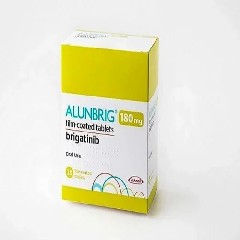
The U.S.FDA approval of brigatinib is based on a two-arm, open-label, multicenter trial (ALTA) in adult patients with locally advanced or metastatic ALK-positive non-small cell lung cancer (NSCLC) who have progressed on crizotinib. The primary efficacy outcome measure was overall response rate (ORR) based on Response Evaluation Criteria in Solid Tumors (RECIST v1.1) as assessed by an independent review committee (IRC). A total of 222 patients were randomly assigned to receive continuous treatment with 90 mg QD once daily (Arm A) or a lead-in dose of 90 mg QD for 7 consecutive days followed by 180 mg QD continuously (Arm B). Randomization was stratified according to brain metastasis (presence vs. absence) and best previous response to crizotinib (complete or partial response vs. any other response/not evaluable). The median follow-up time for groups B and 7 was 8.3 months. Group A was 8 months old. Investigator assessment confirmed the ORR in Arm B to be 54%. IRC evaluation confirmed an ORR of 53% in Arm B. The confirmed ORR in Arm A was 45% as assessed by the investigator and 48% as assessed by the IRC. Investigators estimated median PFS to be 12.9 months in Arms B and 9.2 months in Arms A. The IRC-assessed median PFS was 15.6 months and 9.2 months in Arms B and A, respectively.
In addition to its remarkable efficacy, brigatinib also has a relatively high safety profile. Of course, any drug will inevitably be accompanied by certain side effects, and brigatinib is no exception. However, under the guidance and monitoring of doctors, most patients can tolerate and control these side effects well, ensuring the smooth progress of treatment.
In general, brigatinib, as a new type of targeted therapy for lung cancer, has brought new treatment prospects to lung cancer patients with its unique mechanism and significant efficacy. It can not only effectively control the progression of the disease, but also improve the quality of life and survival of patients. It is undoubtedly an important breakthrough in the field of lung cancer treatment. With further research and accumulation of clinical practice in the future, we believe that brigatinib will bring good news to more patients with lung cancer.
[ 免责声明 ] 本页面内容来自公开渠道(如FDA官网、Drugs官网、原研药厂官网等),仅供持有医疗专业资质的人员用于医学药学研究参考,不构成任何治疗建议或药品推荐。所涉药品可能未在中国大陆获批上市,不适用于中国境内销售和使用。如需治疗,请咨询正规医疗机构。本站不提供药品销售或代购服务。


