
.jpeg)
FDA approves Travere Therapeutics’ sparsentan/sparsentan to slow kidney function decline in adults with primary IgAN
The U.S. Food and Drug Administration (FDA) has fully approved Travere Therapeutics’ Sparsentan to slow the decline in kidney function in adults with primary IgA nephropathy (IgAN) who are at risk for disease progression.
The decision, announced on September 5, 2024, is based on 2-year validation results from the Phase 3 PROTECT study, the largest head-to-head interventional study of IgAN to date and the only one with an active control. The switch from accelerated approval to full approval makes spaxentan the second treatment to receive full approval for IgAN, following last year's approval of Calliditas Therapeutics' budesonide (Tarpeyo) extended-release capsules.
This approval should facilitate patient access to a drug that directly targets kidney damage, reduces proteinuria, even to the point of complete remission in some patients, and is more effective at preserving kidney function over time than current standard treatments. This is a very exciting milestone in the development of treatments for IgAN.
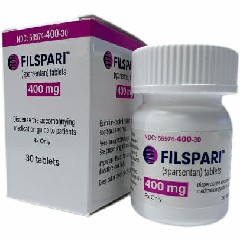
Endothelin and Angiotensin II receptor antagonists previously received accelerated approval in February 2023 for demonstrating clinically meaningful and statistically significant improvements in proteinuria compared with active controls in the Phase 3 PROTECT study. PROTECT was a global, randomized, multicenter, double-blind, active-controlled clinical trial evaluating the safety and efficacy of sparsentan 400 mg versus irbesartan 300 mg in 404 patients with IgAN aged ≥18 years and with persistent proteinuria despite maximal tolerance to ACE or ARB therapy.
Accelerated approval makes sparsentan the first and only non-immunosuppressive treatment to target glomerular injury in the kidney to reduce proteinuria in adults with primary IgAN who are at risk for rapid disease progression. However, at the time of approval, it had not been determined whether sparsentan slowed the decline in renal function in patients with IgAN, and its continued approval was dependent on confirmation of the clinical benefit of PROTECT.
Results from PROTECT's Topline 2-year confirmatory secondary endpoint showed that sparsentan preserved kidney function long-term, with clinically meaningful differences in total eGFR slope (1.0 mL/min/1.73 m2 per year; P=0.058) and chronic slope (1.1 mL/min/1.83 m2 per year; P=0.037) compared with irbesartan, although the total eGFR slope did not reach statistical significance.
Of note, the 2-year efficacy data included in the FDA-approved label are a modified intention-to-treat (ITT) analysis that evaluates data from all patients regardless of discontinuation of treatment. In the final analysis of 404 randomized patients, spaxentan significantly reduced the rate of renal function decline from baseline to week 110 compared with irbesartan. In the ITT analysis included in the label, the mean eGFR slopes from baseline to week 110 were -3.0 mL/min/1.73 m2/year for sparsentan and -4.2 mL/min/1.75 m2/year for irbesartan, respectively, corresponding to a statistically significant treatment effect of 1.2 mL/min/1.73 m2/year (P=0.0168).
The positive treatment effect on proteinuria observed at week compared with the active control irbesartan was sustained through the 2-year measurement period. Additional results from the PROTECT study showed that the benefit of sparsentan on absolute eGFR increased over time, with a mean change from baseline of 3.8 mL/min/1.73 m2 for sparsentan and irbesartan by week 110.
[ 免责声明 ] 本页面内容来自公开渠道(如FDA官网、Drugs官网、原研药厂官网等),仅供持有医疗专业资质的人员用于医学药学研究参考,不构成任何治疗建议或药品推荐。所涉药品可能未在中国大陆获批上市,不适用于中国境内销售和使用。如需治疗,请咨询正规医疗机构。本站不提供药品销售或代购服务。


