
.jpeg)
How long does it take for Dacomitinib to become resistant?
Dacomitinib (Dacomitinib), as a targeted therapy for patients with non-small cell lung cancer (NSCLC) with specific gene mutations, has attracted widespread attention in the field of lung cancer treatment in recent years. It is a second-generation tyrosine kinase inhibitor that effectively blocks the growth signaling pathway of tumor cells by precisely inhibiting the activity of epidermal growth factor receptor (EGFR), providing new treatment hope for patients.
In the treatment of lung cancer, dacomitinib has demonstrated its unique advantages. First of all, its inhibitory effect on EGFR and its family members such as HER2 and HER4 is powerful and long-lasting, which makes it excellent in controlling tumor growth and spread. Secondly, dacomitinib also has good blood-brain barrier penetration ability, which is particularly important for NSCLC patients who are at risk of brain metastasis, because it can directly act on brain lesions and control disease progression. In addition, although dacomitinib may cause some adverse reactions, such as diarrhea, rash, etc., in most cases these reactions are controllable and can be effectively alleviated through appropriate dose adjustment or symptomatic treatment.
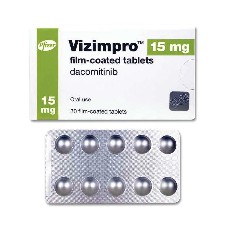
Regarding the issue of resistance to dacomitinib, this is a complex and individualized issue. The duration of resistance may vary significantly between patients. Generally speaking, the average resistance time for EGFR mutation-positive NSCLC patients after receiving dacomitinib treatment is about 12 to 15 months. In other words, some patients may develop drug resistance after one to one and a half years of dacomitinib treatment. However, this time is not absolute, and some patients remain sensitive to drugs more than two years after receiving treatment. The emergence of drug resistance is often related to a variety of factors, including the patient's genetic background, tumor microenvironment, and disease status before treatment. When a patient develops drug resistance, doctors will adjust the treatment plan according to the patient's specific situation, such as switching to other EGFR inhibitors or combining immunotherapy drugs, to maximize the patient's survival and improve their quality of life.
In summary, dacomitinib, as an effective targeted treatment drug for non-small cell lung cancer, provides patients with a new treatment option. However, the emergence of drug resistance is inevitable, and patients should use drugs rationally under the guidance of doctors and closely monitor treatment responses and adverse reactions so that treatment plans can be adjusted in a timely manner.
[ 免责声明 ] 本页面内容来自公开渠道(如FDA官网、Drugs官网、原研药厂官网等),仅供持有医疗专业资质的人员用于医学药学研究参考,不构成任何治疗建议或药品推荐。所涉药品可能未在中国大陆获批上市,不适用于中国境内销售和使用。如需治疗,请咨询正规医疗机构。本站不提供药品销售或代购服务。


