
.jpeg)
How is the efficacy of platinib evaluated in the treatment of RET fusion lung cancer?
Platinib, as a targeted therapy for RET gene fusion-positive lung cancer, has shown significant efficacy in clinical applications in recent years.
In multiple clinical trials, platinib has shown impressive therapeutic effects in patients with RET fusion-positive lung cancer. For example, in the ARROW study, the objective response rate ( n>ORR) reached 79%, and the disease control rate (DCR) was as high as 93%. For previously treated patients, platinib also demonstrated strong efficacy, with ORR and DCR reaching 62% and 91% respectively. These data fully prove the excellent performance of platinib in the treatment of RETfusion lung cancer.
In addition to high ORR and DCR, platinib also achieved significant results in extending patients’ progression-free survival (PFS) and overall survival (OS). In related studies, the median PFS of patients treated with platinib reached 16.5 months, and the duration of response in some patients even exceeded 38.8 months. The improvement of these data directly reflects the improvement of patients' quality of life and the extension of survival, further confirming the clinical value of platinib.
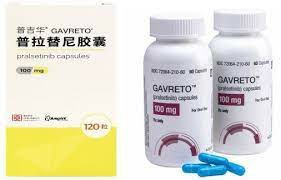
RETFusion-positive late stageNSCLCPatients often have brain metastases, which further makes treatment more difficult. However, platinib has also shown good efficacy in the treatment of these patients. Relevant studies have shown that in patients with brain metastases treated with platinib, the ORR of the central nervous system (CNS) reached 56%, and some patients achieved complete remission. This discovery provides new treatment hope for patients with brain metastases.
While the efficacy is remarkable, the safety and tolerability of platinib have also been fully verified. Clinical trial data show that the main adverse reactions of platinib are mostly grade 1~2, such as neutropenia, anemia, hypertension, etc., and most patients do not need to reduce the dose or discontinue the drug due to adverse reactions. This shows that while maintaining good efficacy, platinib also has a high safety profile.
Compared with traditional chemotherapy drugs and immune checkpoint inhibitors, platinib is more effective in RET fusion lung cancer treatment. Multiple studies have shown that platinib's ORR and DCR are higher than those of these traditional treatments, and it also has obvious advantages in PFS and OS. In addition, compared with seputinib, which is also a RET inhibitor, platinib also shows its unique efficacy advantages in some aspects.
Based on the excellent performance of Platinib inRETfusion lung cancer treatment, its clinical application is constantly expanding. Currently, platinib has been approved for the treatment of adult patients with RET gene fusion-positive locally advanced or metastatic non-small cell lung cancer who have previously received platinum-containing chemotherapy, and is expected to be further expanded to the treatment of more types of RET fusion-positive cancers in the future.
In summary, platinib has demonstrated significant clinical efficacy and good safety and tolerability in the treatment of RETfusion lung cancer. Its high ORR, DCR and improved PFS and OS data bring new treatment hope to RET fusion-positive lung cancer patients.
[ 免责声明 ] 本页面内容来自公开渠道(如FDA官网、Drugs官网、原研药厂官网等),仅供持有医疗专业资质的人员用于医学药学研究参考,不构成任何治疗建议或药品推荐。所涉药品可能未在中国大陆获批上市,不适用于中国境内销售和使用。如需治疗,请咨询正规医疗机构。本站不提供药品销售或代购服务。


