
.jpeg)
How effective is the targeted therapy of dabrafenib/dabrafenib + trametinib?
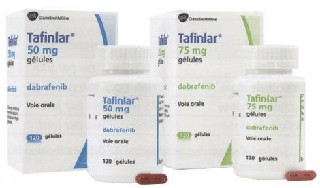
The combined use of the BRAF inhibitor dabrafenib and the kinase inhibitor Trametinib successfully blocked the transcription of the mutated BRAF gene. Dabrafenib specifically targets the V600E mutated BRAF protein, slowing or stopping uncontrollable cell growth by interfering with BRAF signaling. Its currently approved indications include melanoma, non-small cell lung cancer, thyroid cancer, solid tumors and low-grade gliomas with BRAF V600 mutations. Dabrafenib has been studied in patients whose cancers have BRAF V600 mutations.
1. Melanoma
Dabrafenib is more effective than the cancer drug dacarbazine at controlling melanoma that has spread to other parts of the body or cannot be removed with surgery. This is based on a major study involving 250 patients, which measured how long patients lived before their disease worsened. Patients taking dabrafenib lived an average of 6.9 months before their disease worsened, while those taking dacarbazine lived an average of 2.7 months.
Two other studies looked at melanoma that had spread to other parts of the body or couldn't be removed with surgery, using dabrafenib in combination with trametinib. In one study, 423 patients received dabrafenib either in combination or alone. Patients who received the combination therapy lived without worsening for 11 months, while those who received dabrafenib alone lived for 8.8 months. In a second study involving 704 patients, dabrafenib plus trametinib was compared with vemurafenib, another melanoma drug. Patients who received the combination lived an average of 25.6 months, compared with 18 months for those who received vemurafenib.
In a study involving870 patients with surgically removed stage III melanoma, the combination of dabrafenib and trametinib was compared to placebo (a dummy treatment) for 1 year. About 40% of patients who received the combination therapy died or had disease recurrence after an average of about 3.5 years, compared with 59% of patients who received a placebo.
2. Non-small cell lung cancer
In a major study,171 patients with non-small cell lung cancer were treated with dabrafenib in combination with trametinib or dabrafenib alone. The primary measure of effectiveness is the percentage of patients who respond completely or partially to treatment. Response to treatment is assessed using body scans and the patient's clinical data. The use of dabrafenib and trametinib resulted in responses in more than 60% of patients, compared with 23% of dabrafenib alone.
3. Thyroid cancer cancer
A nine-cohort non-randomized trialBRF117019 enrolled patients with rare cancers with BRAF V600E mutations, including locally advanced, unresectable or metastatic anaplastic thyroid cancer with no local treatment options. Among the 23 patients with anaplastic thyroid cancer who were evaluable for response, the overall response rate was 61% (95% CI, 39%-80%). The complete response rate and partial response rate were 4% and 57% respectively. 64% of responding patients had a response lasting at least 6 months. The adverse reaction profile for all patients in the trial and in the anaplastic thyroid cancer cohort was similar to that observed in other approved indications.
4. Low-grade glioma
In an ongoing study, 110 children with BRAF V600E-mutated low-grade gliomas received dabrafenib chemotherapy in combination with trametinib or carboplatin and vincristine (other cancer drugs). The main measure of effectiveness is the proportion of children who have a complete or partial response to treatment (the disappearance or shrinkage of their tumors) after at least 32 weeks of treatment. Response to treatment is assessed using body scans and the patient's clinical data. Treatment with Finlay and trametinib resulted in a response in 47% (34 of 73) of children, compared with 11% (4 of 37) of children treated with carboplatin and vincristine.
[ 免责声明 ] 本页面内容来自公开渠道(如FDA官网、Drugs官网、原研药厂官网等),仅供持有医疗专业资质的人员用于医学药学研究参考,不构成任何治疗建议或药品推荐。所涉药品可能未在中国大陆获批上市,不适用于中国境内销售和使用。如需治疗,请咨询正规医疗机构。本站不提供药品销售或代购服务。


