
.jpeg)
Lazcluze (Lazertinib) - How to take Lazcluze
Lazcluze (Lazertinib), in combination with amivantamab (evantumumab), is indicated for the first-line treatment of adult patients with locally advanced or metastatic non-small cell lung cancer (NSCLC) who have epidermal growth factor receptor (EGFR) exon 19 deletions or exon 21 deletions. The L858R substitution mutation was detected by a test approved by the U.S. Food and Drug Administration (FDA) .
Patients who received Lazcluze combined with amivantamab for first-line treatment of non-small cell lung cancer were selected based on the presence of EGFR exon 19 deletions or exon 21 L858R substitution mutations in tumors or plasma specimens. If these mutations are not detected in the plasma specimen, test the tumor tissue.
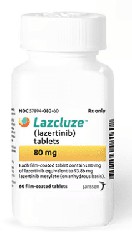
The recommended dose of Lazcluze is 240 mg once daily in combination with amivantamab, with or without food. Swallow Lazcluze tablets whole without crushing, splitting or chewing. Continue treatment until disease progression or unacceptable toxicity occurs. If taking amivantamab on the same dayLazcluze can be taken at any time before taking amivantamab.
When initiating treatment with Lazcluze and amivantamab, use anticoagulant prophylaxis to prevent venous thromboembolic events (VTE) for the first four months of treatment. If there are no signs or symptoms of VTE during the first four months of treatment, anticoagulation prophylaxis may be discontinued at the discretion of the healthcare provider.
After patients are treated with Lazcluze, they may experience intolerable adverse reactions. The doctor will adjust the dose of the drug according to the severity of the condition, such as reducing, interrupting or stopping treatment; the initial dose can be reduced to 160mg once a day (Two tablets 80 mg tablets); the second dose can be reduced to 80 mg once daily (one tablet 80 mg tablets); if the dose of 80 mg once daily is not tolerated, the drug needs to be permanently discontinued.
When starting to use Lazcluze unionDuring treatment with amivantamab, use an alcohol-free (e.g., isopropyl alcohol, ethanol-free) moisturizer, and encourage patients to limit sun exposure, wear protective clothing, and use broad-spectrum UVA/UVB sunscreen during and for 2 months after treatment to reduce the risk of adverse skin reactions. Consider preventive measures(such as use of oral antibiotics) to reduce the risk of adverse skin reactions.
[ 免责声明 ] 本页面内容来自公开渠道(如FDA官网、Drugs官网、原研药厂官网等),仅供持有医疗专业资质的人员用于医学药学研究参考,不构成任何治疗建议或药品推荐。所涉药品可能未在中国大陆获批上市,不适用于中国境内销售和使用。如需治疗,请咨询正规医疗机构。本站不提供药品销售或代购服务。


