
.jpeg)
How effective is platinib in the treatment of prostate cancer?
Platinib (trade name: Pujihua®) is a highly selective receptor tyrosine kinase RET (Rearranged during Transfection) inhibitor, mainly used to treat specific types of lung and thyroid cancer. Specifically, Platinib has been approved by the China National Medical Products Administration for the treatment of adult patients with locally advanced or metastatic non-small cell lung cancer (NSCLC) who are transfection rearrangement (RET) gene fusion positive, as well as advanced or metastatic RET mutant medullary thyroid cancer (< /span>MTC) adults and pediatric patients 12 years and older, as well as adult and pediatric patients 12 years and older with advanced or metastatic RETfusion-positive thyroid cancer that requires systemic therapy and is refractory to radioactive iodine (if radioactive iodine is applicable).
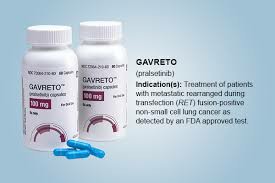
Prostate cancer is a common male malignant tumor, and its treatment usually includes surgery, radiotherapy, chemotherapy, endocrine therapy and other methods. However, targeted therapy for prostate cancer often relies on the understanding of specific tumor driver genes and the development of corresponding targeted drugs. In prostate cancer, although there are some known tumor driver gene mutations, RET gene mutations are not one of the main drivers of prostate cancer.
Therefore, based on current knowledge and clinical practice, platinib is not a routine treatment for prostate cancer, and its efficacy in the treatment of prostate cancer has not been proven. For prostate cancer patients, the choice of treatment plan should be comprehensively considered based on the patient's specific situation, pathological type, stage, tumor driver gene mutation and other factors, and decisions should be made under the guidance of professional doctors.
[ 免责声明 ] 本页面内容来自公开渠道(如FDA官网、Drugs官网、原研药厂官网等),仅供持有医疗专业资质的人员用于医学药学研究参考,不构成任何治疗建议或药品推荐。所涉药品可能未在中国大陆获批上市,不适用于中国境内销售和使用。如需治疗,请咨询正规医疗机构。本站不提供药品销售或代购服务。


