
.jpeg)
How effective is Aceminib in the treatment of chronic myeloid leukemia?
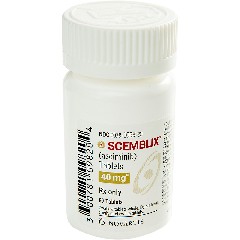
Asciminib (Asciminib) is a new tyrosine kinase inhibitor (TKI) developed in recent years for chronic myelogenous leukemia (CML). It has good efficacy especially for patients who are resistant or intolerant to traditional TKI drugs. As a third-generation TKI, Aceminib has shown significant clinical advantages in the treatment of CML, especially in controlling the disease and improving patients' quality of life.
The mechanism of action of aceminib
The occurrence of chronic myeloid leukemia is related to theBCR-ABL1 fusion gene. The tyrosine kinase encoded by this gene can lead to abnormal proliferation of leukemia cells. Aceminib is a specific targeting ABL myristoyl pocket (STAMP) inhibitor that blocks the growth and division of cancer cells by directly acting on a unique site of BCR-ABL1 tyrosine kinase.
Compared with traditional TKI drugs (such as imatinib, nilotinib and dasatinib), aximinib has a different target and can deal with some mutations that are resistant to other TKI drugs, especially the T315I mutation. The T315I mutation is considered to be an important cause of resistance to most TKI drugs, and aximinib has significant advantages in the treatment of such mutations.
Clinical effects
In a series of clinical trials, Aceminib has shown excellent efficacy. Particularly in patients who are refractory or resistant to otherTKIs, it provides an effective treatment option.
1.Patients withoutT315I mutation
For those withoutT315Imutation but for otherTKIsIn patients with drug-resistant CML, aceminib significantly improved the proportion of complete hematological response (CHR) and major molecular response (MMR). Studies have shown that among patients treated with aceminib, many achieved significant molecular remission within months, in which expression of the BCR-ABL gene dropped significantly. This shows that Aceminib can not only effectively control the disease, but also prevent further progression of the disease.
2.T315IMutation patients
Aximinib has shown excellent efficacy in CML patients with the T315I mutation. Traditional TKI drugs have limited inhibitory effects on T315I mutations, resulting in limited treatment options for such patients. However, through its unique mechanism of action, aceminib can effectively inhibit the T315I mutated BCR-ABL1 kinase, helping patients achieve a higher remission rate. Clinical trials have shown that many patients with the T315I mutation achieved durable molecular responses after treatment with aceminib.
Sustainability of efficacy
The efficacy of aceminib is not only reflected in the rapid response to initial treatment, but also in its sustained disease control ability. Most patients are able to maintain a stable molecular remission state during long-term treatment with aceminib, which is critical for the long-term management of chronic myelogenous leukemia. Compared with otherTKI drugs, aceminib has relatively few side effects and is well tolerated by patients, further enhancing its advantages as a long-term treatment drug.
Safety and Tolerability
The safety and tolerability of aceminib have also been extensively verified in clinical studies. Although aximini may cause some common side effects, such as gastrointestinal discomfort, high blood pressure, fatigue, etc., these side effects are usually controllable and can be managed by most patients with dose adjustments or auxiliary medications. Compared with traditional chemotherapy, Aceminib has relatively mild side effects, and its targeting effect is more precise and has less impact on normal cells, so the patient's quality of life is relatively high.
Additionally, in clinical trials, aceminib showed good long-term safety. Although some patients may experience thrombocytopenia or mild liver function abnormalities, most of these problems can be effectively controlled through regular monitoring and timely adjustment of medication regimens.
Comparison with otherTKI
Compared with other tyrosine kinase inhibitors (such as imatinib, nilotinib, dasatinib, etc.), aximinib shows unique advantages in dealing with drug resistance. Especially for patients who have received multiple TKI treatments but failed to achieve satisfactory results, Aceminib provides a new treatment approach. In addition, the targeting mechanism of aximini is different from other TKI drugs, allowing it to avoid or delay the resistance problems that are common in some patients when using traditional TKIs.
Asciminib (Asciminib) has demonstrated significant efficacy in the treatment of chronic myelogenous leukemia (CML), particularly in patients who are resistant to other TKI drugs or harbor the T315I mutation. It inhibits BCR-ABL1tyrosine kinase through a unique mechanism of action, which can effectively control the proliferation of leukemia cells, help patients achieve molecular remission and maintain long-term stability of the disease. Although Asiminib does have some side effects, it is generally well tolerated and most patients are able to manage the side effects with appropriate treatment. Overall, aximini provides a new and powerful treatment option for patients with chronic myelogenous leukemia, especially for patients with drug resistance or treatment difficulties. It has important clinical value.
[ 免责声明 ] 本页面内容来自公开渠道(如FDA官网、Drugs官网、原研药厂官网等),仅供持有医疗专业资质的人员用于医学药学研究参考,不构成任何治疗建议或药品推荐。所涉药品可能未在中国大陆获批上市,不适用于中国境内销售和使用。如需治疗,请咨询正规医疗机构。本站不提供药品销售或代购服务。


